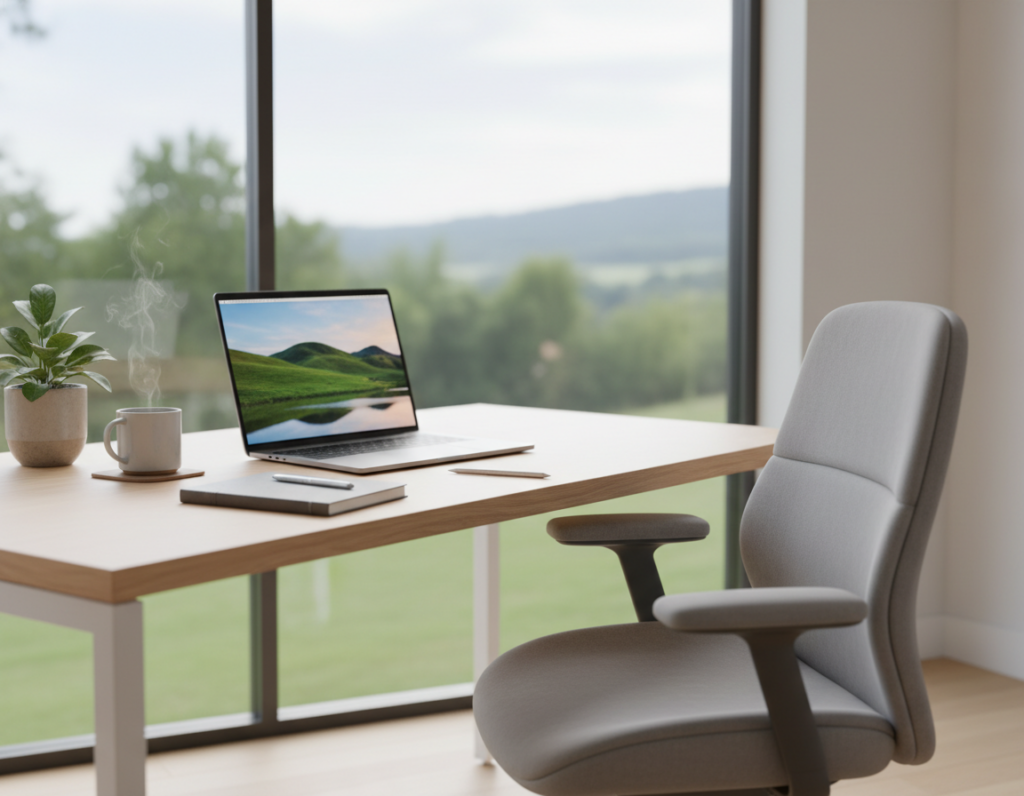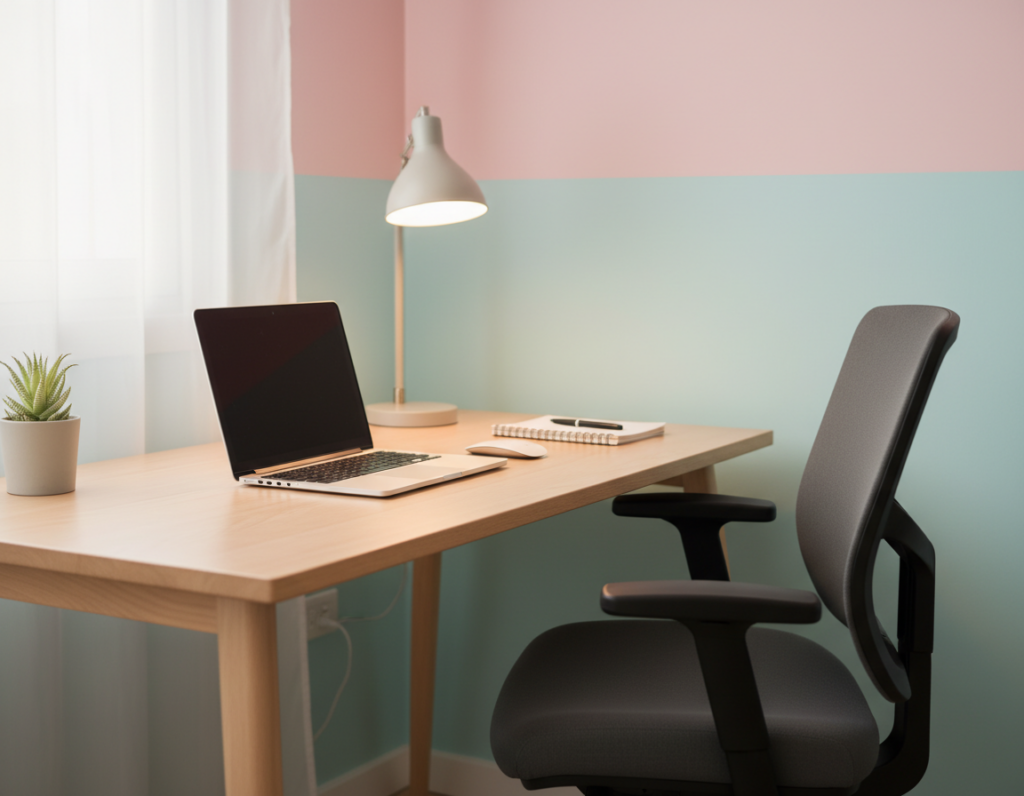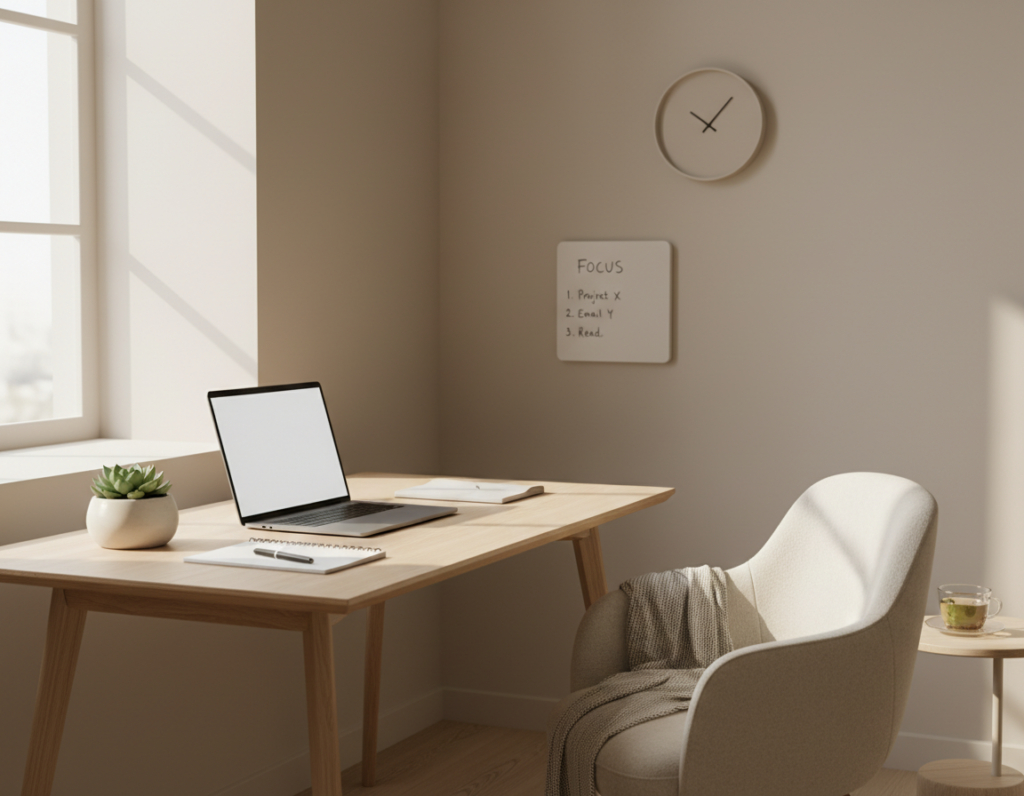
Clutter can steal focus and time. Julie Dykema, director of in‑home organizing at the Container Store, notes that a crowded desk surface often creates stress for those working home.
The right approach turns a chaotic area into a calm workspace. Small steps help reclaim an office space and protect the work day. A clear surface makes it easier to find items and stay on task.
Practical ideas include removing non‑essential things, choosing storage that fits the room, and picking a single organizer for frequently used supplies. These moves save minutes and lift morale.
Whether the setup sits in a corner or a dedicated room, simple office organization creates a neat area that supports career goals and life balance. The next sections outline a step‑by‑step plan and actionable tips for lasting change.
Defining Your Ideal Workspace
Small choices about chairs, desks, and storage shape a space that invites focus. Begin by imagining how the area should feel each morning. Visualizing the desired mood helps decide which furniture stays and which should go.
Assessing Furniture Needs
Check the desk and chair for comfort and function. If a desk just collects things, it is not earning its place.
Look at drawers and desktop areas. Every pen, tool, and small supply should have a designated location.
Identifying Personal Inspiration
Whitney Leigh Morris recommends keeping only items needed to live comfortably in small spaces.
“Understand what you truly need; this creates comfort and contentment.”
- Decide whether the desk faces a window or a wall for better daily flow.
- Assess if the room needs extra storage for books or decorative items.
- Choose one organizer system for frequently used supplies to reduce clutter.
How to Organize Home Office Spaces Effectively
Start with a clear inventory. Listing every item on the desk and in the surrounding room gives a factual snapshot of the workspace. This quick step helps identify what earns a permanent spot and what becomes backstock.
Julie Dykema suggests using a company resource room or storage boxes for extra paper and supplies. Keeping backstock out of reach preserves the desk for active work and reduces visual clutter.
Create zones for current projects, reference materials, and supplies. Labeling each zone makes retrieval faster and saves time during busy days.
- Take inventory of all items on the desk and around the room.
- Keep only essentials within arm’s reach; place extras in boxes or closed storage.
- Set a simple, repeatable system for papers and project materials.
Regular review is key. A monthly check of habits and storage needs keeps the office space productive and prevents clutter from creeping back into life.
Clearing the Desk Surface
A clear desktop invites focus and reduces decision fatigue each workday. Start by scanning the surface and making quick keep-or-move decisions. The aim is a calm workspace that supports one task at a time.
Removing Non-Essential Items
Begin small. Remove decorative or duplicate items that do not support daily work. Place extras into a box for thirty days; if they are unused, they don’t belong on the desk.
“My own desk has only a notepad and a pen, keeping everything else out of sight.”
Keep essentials within reach and hide the rest. Store surplus pens and random supplies in a drawer or closed storage. This prevents visual clutter and makes the desktop a functional surface.
Simple systems make maintenance easier. Try a short checklist:
- Clear everything off the desk.
- Return only daily items and a single notepad.
- Use hidden storage for all other items.
For more inspiration and practical solutions, see desk organization ideas. A tidy surface creates the space needed for focused work every day.
Sorting Items into Functional Categories
Classifying each item by fate—keep, file, shred, donate—keeps the process moving. Start by clearing the desk into broad piles. This gives a quick view of what fills the space.
Create labeled trays or boxes for papers that need action, papers to file, and papers to shred. Use a separate box for electronics recycling and one for donations.
When sorting office supplies, keep only reliable pieces like a stapler, tape dispenser, and a quality pen. Put extras in a donation box rather than crowding a drawer.
- Designate a box for sentimental items and deal with them later so they don’t slow the process.
- Be honest about papers: file what is needed, scan what can be digitized, and recycle the rest.
- Give every piece a permanent place in storage or a drawer for quick retrieval.
These simple tips reduce clutter and make the work life easier. A systematic sort saves minutes each day and keeps the space ready for focused work.
Managing Paper Clutter and Filing Systems
Tackling stacks begins by giving each sheet a clear next step. Start with a single work table and four piles: action, file, shred, recycle. This quick rule reduces decision fatigue and limits the spread of clutter in the space.
Actionable Paperwork
Designate a weekly session where items in the action pile are processed. Use labeled folders and a small box for short-term projects.
If a filing cabinet feels bulky, limit permanent storage to one drawer. Add drawer dividers for supplies and small folders so the surface stays clear for work.
Shredding Sensitive Documents
Protect personal data. Shred bank statements, insurance forms, and anything with an ID number before recycling. Many communities offer bulk shredding services for secure disposal.
Recycling Strategies
About 75% of the papers found in a typical home office can be recycled on the first pass. Use a recycle box near the table and empty it weekly.
- Scan what can be digitized and recycle the rest.
- Use labeled folders for long‑term files to save time during the week.
- Simplify: one well‑organized drawer often outperforms a complex filing system.
“A consistent, simple routine keeps paperwork from overwhelming life.”
Utilizing Vertical Storage Solutions
Vertical storage unlocks unused room above a desk, turning walls into working surfaces. Laura Tribbett of Outline Interiors notes that upward storage is often overlooked yet powerful for reducing desktop clutter.
Shelves above the desk hold reference books, boxes, and decorative items. A wall-mounted system or floating shelves keeps the workspace clear while preserving easy access to items.
Stackable trays work well when the desk is small. They lift paper and small projects off the desktop and keep priorities visible without crowding the surface.
- Use pegboards or a slim wall calendar for daily notes and tools.
- Store seldom-used boxes up high and keep daily supplies within arm’s reach.
- Mix open shelving with closed bins to hide visual clutter.
Moving items onto the wall creates a more open home office and a calmer workspace. Vertical solutions make the most of limited space and help keep the desk ready for focused work.
Taming Cable and Cord Chaos
Visible wires draw the eye and break concentration during work hours. Simple, small changes restore a clean desk and reduce daily frustration.
Labeling makes future changes fast. Use Velcro cable labels so each cord is easy to identify in a busy home office. This saves time when unplugging devices or swapping gear.
Mount and route for a neater look. Adhesive cable holders stick to the desk surface and keep cords from falling behind furniture. If a power strip creates clutter, mount it under the desk rather than on the wall or floor.
- Bundle multiple cords with a cable sleeve for tidy, concealed storage.
- Keep one clip near a drawer for small adapters and frequent items.
- Invest in a few labels and clips — small purchases yield a professional workspace.
With these simple steps, cords stay in sight and within reach. A cleared surface makes the desk feel orderly and supports a focused, efficient office setup.
Creating a Cozy and Productive Environment
Comfort and personality help a desk become a place you want to use each day. Carly Cicero of Cicero Design Group recommends adding colors or decor that inspire focus and calm during work.
Position the desk near natural light when possible. Sunlight boosts energy and makes a small room feel larger.
Add a potted plant, a scented candle, or a small piece of art. These items make the space feel less utilitarian and more lived in.
“Personal touches helped my clients spend better time working; small comforts change the mood and productivity.”
- Keep a soft throw on the chair for long sessions.
- Balance visible items with hidden storage in a drawer or bin for loose papers and supplies.
- Use one inspiring object on the wall and one functional tool on the desk.
These simple tips blend storage and warmth so the office space supports life and work. When a room feels right, focus follows naturally.
Digitizing Documents to Save Space
Scanning receipts and records lets a small scanner replace bulky boxes in the room. Using a compact model such as the Brother DS-640 makes converting paper into searchable files fast and simple.
Once scanned, shred the originals and move digital files into a clear folder structure on the computer. A logical system of folders and consistent file names keeps paperwork easy to find without hunting through drawers or boxes.
Back up daily. Services like Backblaze protect digital files from loss and make documents accessible from any device. Regular backups mean important records no longer crowd the desk or storage closets.
- Scan receipts, bills, and records with a mobile scanner.
- Shred originals you no longer need and recycle the paper.
- Create folders that mirror work categories for quick retrieval.
Digitizing cuts paper volume, clears visible sight lines, and reclaims valuable space. With fewer physical files, the home workspace feels calmer and daily workflow becomes more efficient.
Maintaining Your Organized System
A weekly reset is the simplest way to defend an orderly desk and clear desktop. Spend five to ten minutes at the end of each week returning items to their place. This habit keeps clutter from multiplying and saves time during busy days.
Use drawer dividers for small office supplies so pens and tools are always easy to find. If drawers feel crowded, pare down extras and keep only reliable pieces in reach.
When a filing cabinet looks full, sort folders and recycle unneeded paper. Regular filing sessions prevent backlog and make the workspace ready for work each morning.
“Learning simple systems helps clients move through tough decisions and maintain order in other parts of the home.”
Reassess storage every few months to ensure shelf, bin, and drawer layouts still meet current needs. Small adjustments now prevent major overhauls later and keep this place productive for life and work.
- Clear the surface weekly.
- Return items to labeled drawers and bins.
- Sort filing and recycle old folders.
For a short checklist and more steps for an organized office, include this routine in weekly habits and your space will stay calm and efficient.
Conclusion
A few reliable systems give anyone the confidence to tame paper clutter and reclaim time.
Organizing a home office is a rewarding process that lifts stress and improves productivity. Clear routines make the desk easier to use and keep items from wandering back into view.
By following these tips, someone can manage papers and paper clutter, set simple storage rules, and create a desk that supports daily work. Patience matters; habits form with brief, steady effort over weeks.
Consistent maintenance of drawers, shelves, and files preserves order in life and the office. Start small, stay focused, and enjoy the extra time gained for the things that matter most.