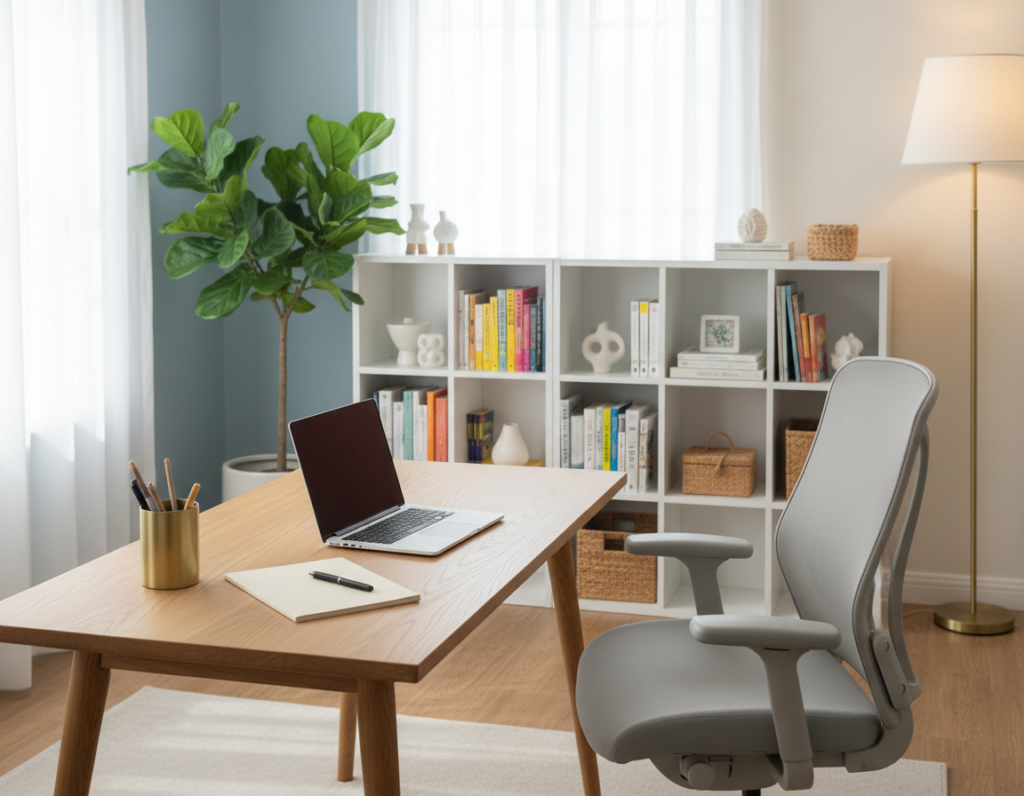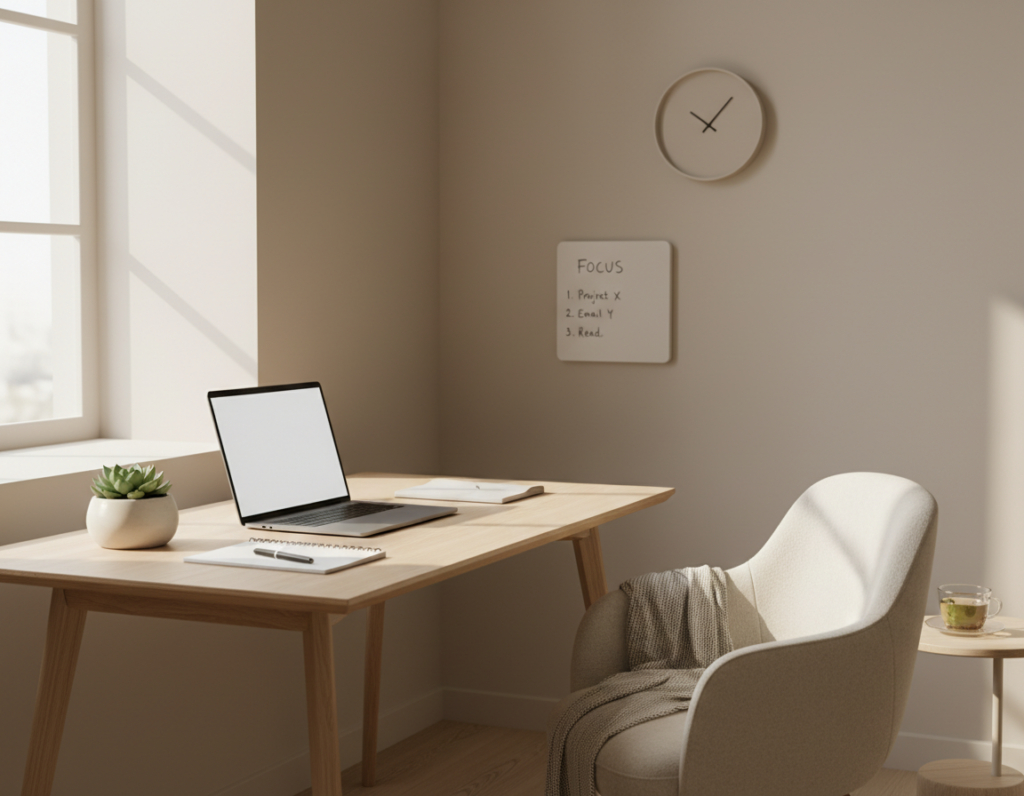
One small change to a desk setup can transform how someone spends their day. He or she can stop letting phone notifications and background noise fragment attention. The result is better quality work and higher energy for tough tasks.
By blocking interruptions for a single focused hour, people see productivity climb. The American Psychological Association notes multitasking cuts output by up to 40%, so prioritizing deep focus work matters. A brief morning plan of tasks and breaks also reduces fatigue and wasted minutes.
Many adults find their brain is not built for constant interruptions. Removing clutter, silencing notifications and shifting light or screen height can stop repeated disruptions. For practical setup ideas and research-backed guidance, see this Huberman Lab summary on optimizing your space for sustained attention: Huberman Lab essentials.
The Science Behind Mental Fatigue and Focus
Switching between tasks costs more time and effort than most professionals realize. The brain pays a clear price when it splits attention. That cost shows up as lost time, lower productivity, and faster mental fatigue.
The Impact of Multitasking
The American Psychological Association reports multitasking forces the brain to switch continuously, cutting output by up to 40% during a typical workday.
This switching uses extra energy and lengthens the time needed to complete each task. Avoiding simultaneous demands helps conserve attention and energy for the most important work.
Understanding Attention Residue
Attention residue happens when part of the mind stays stuck on a prior task after moving to another. That leftover attention lowers concentration on current work.
Short, focused sessions followed by brief breaks let the brain reset. This pattern reduces fatigue and improves sustained concentration over hours in the day.
- Key takeaway: single-tasking protects cognitive resources.
- Practical result: better concentration, higher productivity, and more energy for deep, focus work.
Essential Workspace Focus Tips for Modern Professionals
Small changes to how someone schedules the day often yield the biggest gains in sustained concentration. Defining the top tasks early gives the brain a clear roadmap for what matters most.
Practical actions to improve focus and productivity:
- Use browser extensions and app blockers to limit distracting sites during deep work sessions.
- Set phone boundaries: designate short windows for calls and messages to protect uninterrupted time.
- Try noise-canceling headphones or a white noise machine to reduce ambient chatter from other people.
- Keep the desk organized so visual clutter does not steal attention from priority tasks.
- Pick one or two digital tools that mute notifications and centralize tasks to save cognitive effort.
Result: clear priorities, fewer interruptions, and better concentration across the work day. With these small adjustments, professionals can reclaim attention for high-impact focus work and sustain energy for longer stretches.
Optimizing Your Physical Desk Setup
A properly arranged desk can remove small physical annoyances that repeatedly steal attention. Good physical setup helps the body and brain work together for longer periods without fatigue.
Ergonomic Positioning
Place the monitor an arm’s length away and set the top of the screen at or slightly below eye level. This prevents neck strain and keeps attention on the task, not on discomfort.
Adjust chair height so feet rest flat and forearms sit level with the desk. A sitting standing desk makes it easy to alternate posture and reduce sitting fatigue across the day.
Lighting and Eye Strain
Use balanced light to lower eye strain and headaches. Natural light is ideal, but a neutral desk lamp can fill gaps without glare.
Changing light levels prevents tired eyes and helps sustain energy for long work sessions.
Managing Visual Clutter
Neuroscience shows multiple visual stimuli compete in the brain. Removing unneeded items from the desk reduces mental competition and improves concentration.
- Keep only daily tools in reach.
- Store papers off the main surface.
- Use minimal décor to limit distractions.
Managing Digital Distractions and Notifications
A single ping can derail an hour of concentrated effort and leave a person scrambling to regain momentum. Research shows it takes about 20 minutes to fully regain optimal focus after an interruption, so controlling digital noise matters.
Establishing communication windows lets someone batch responses and protect deep focus work. Set two or three blocks per day when email and messages are checked. Outside those windows, disable non-essential notifications on phone and computer.
Practical steps to protect attention
- Use browser extensions to block distracting sites during scheduled work blocks.
- Tell colleagues when you are available so unexpected interruptions fall.
- Take short, timed breaks between communication windows so the brain can reset.
“Batching responses preserves uninterrupted time and improves overall productivity.”
When one controls the digital environment and reduces ambient noise, the result is clearer attention and better use of time for high-value tasks.
The Role of Movement in Sustaining Attention
Short, regular movement breaks can reset attention and boost clarity during long periods of work. The 20-8-2 rule—20 minutes sitting, 8 minutes standing, 2 minutes of light movement—gives a simple rhythm to follow through the day.
Following this pattern raises blood flow and oxygen to the brain. That helps lower mental fatigue after hours of sitting.
Research also shows that just 10 minutes of meditation improves attention and response time on cognitive tasks. Combining brief meditative pauses with the 20-8-2 cycle boosts concentration during focused work periods.
Standing desks remove barriers to change posture without interrupting workflow. Alternating between sitting and standing reduces physical tension and supports higher energy levels across the day.
- Use short walks or drink water during the 2-minute movement periods to stay active.
- Schedule 10-minute meditation or deep-breathing sessions when attention dips.
- Treat movement breaks as strategic resets, not indulgences, to protect long blocks of focus work.
“Regular movement is a practical, research-backed way to keep attention steady and reduce distractions.”
Implementing Effective Time Management Techniques
Structured time blocks give the brain a predictable rhythm and reduce friction between tasks. When someone plans clear periods for work, the day becomes easier to manage and energy is preserved.
The Pomodoro Technique
The Pomodoro Technique uses 25 minutes of focused work followed by a 5-minute break. This cycle helps improve focus and concentration while preventing mental fatigue.
Short, timed sessions make it simple to track progress and return to one task without losing momentum. Practitioners often use a simple timer or a dedicated app as a tool.
Prioritizing High-Impact Tasks
Start the morning with the most important tasks to use peak energy where it matters most. Working on one task at a time reduces the cost of multitasking and improves overall productivity.
- Use a method like the Eisenhower Matrix to sort tasks by impact and urgency.
- Schedule clear goals for each period so decision fatigue is lower.
- Include regular breaks and light movement to sustain attention across the day.
“When time is structured, distractions shrink and steady progress follows.”
Incorporating Mindfulness and Breathing Exercises
A brief, intentional breathing routine can reset the mind faster than most people expect. Practicing deep breaths for 5 to 10 minutes increases brain oxygenation and helps sustain concentration during long stretches of work.
Short mindfulness sessions such as a 5-minute meditation let someone clear stress and restore attention. These resets reduce midday fatigue and sharpen mental energy for the next task.
Simple movement or progressive muscle relaxation releases tension that builds from sitting or standing all day. Stretching the neck, shoulders, and wrists can reduce discomfort and lower physical distraction.
- Breathe first: take deep breaths before a demanding project to clear mental fog.
- Visualize: focus on a single object for a minute to train sustained attention.
- Practice regularly: short daily sessions build resilience against constant distractions.
“Mindfulness is not just relaxation; it is a practical tool to combat the fatigue that appears midday.”
When someone makes these steps routine, the body and brain work together more efficiently. The result is steadier concentration, less fatigue, and more usable energy across the work day.
Common Habits That Sabotage Your Concentration
Hidden behaviors in a typical day often chip away at clear thinking and steady work. Identifying these habits makes it possible to reclaim productive hours and reduce mental fatigue.
The Importance of Quality Sleep
Adults need 7–9 hours of quality sleep nightly. Without it, the brain struggles with decision-making, problem solving, and concentration the next day.
Constantly checking email or phone notifications fragments attention. Each interruption adds time to get back to a task and increases fatigue.
Working long hours without regular breaks deepens mental fatigue. Short pauses help reset attention and sustain energy for longer sessions.
- Clutter, poor light, and an uncomfortable setup pull attention away from work and reduce efficiency.
- Ignoring movement—failing to use a sitting standing option—can make energy levels crash by the afternoon.
- Trying to juggle too many tasks creates overwhelm and stalls progress.
“Getting consistent sleep and protecting uninterrupted time are the simplest, most powerful ways to improve daily concentration.”
By spotting these habits, someone can change their environment, set boundaries with notifications, build short breaks into the schedule, and restore steady attention and energy.
Conclusion
A handful of steady adjustments can turn scattered work hours into predictable, productive stretches.
Improving focus does not demand a full life overhaul. Small changes to the workspace and daily habits remove barriers like digital distractions and poor ergonomics.
Start with one strategy—optimize the desk or set communication windows—and build from there. Over time, consistent practice trains sustained concentration and makes deep focus work easier to enter throughout the day.
For practical methods and research-based guidance on how to how to improve focus and concentration, explore tools that support attention. Controlling time and environment produces better quality output and higher productivity with less effort.