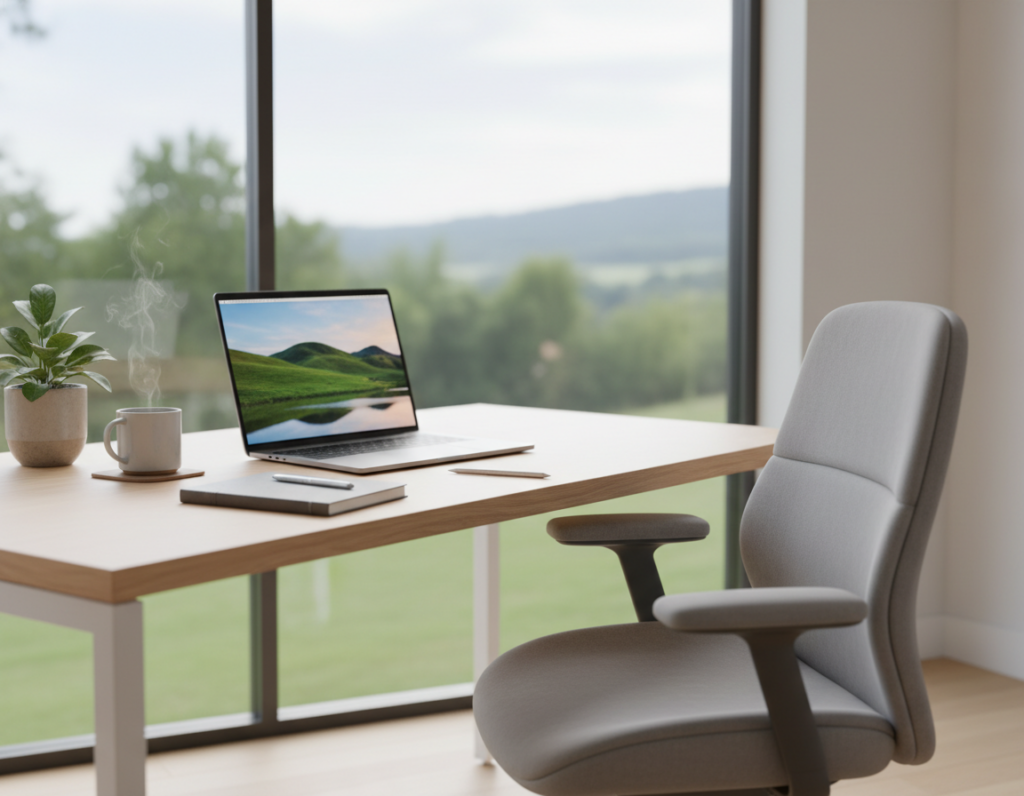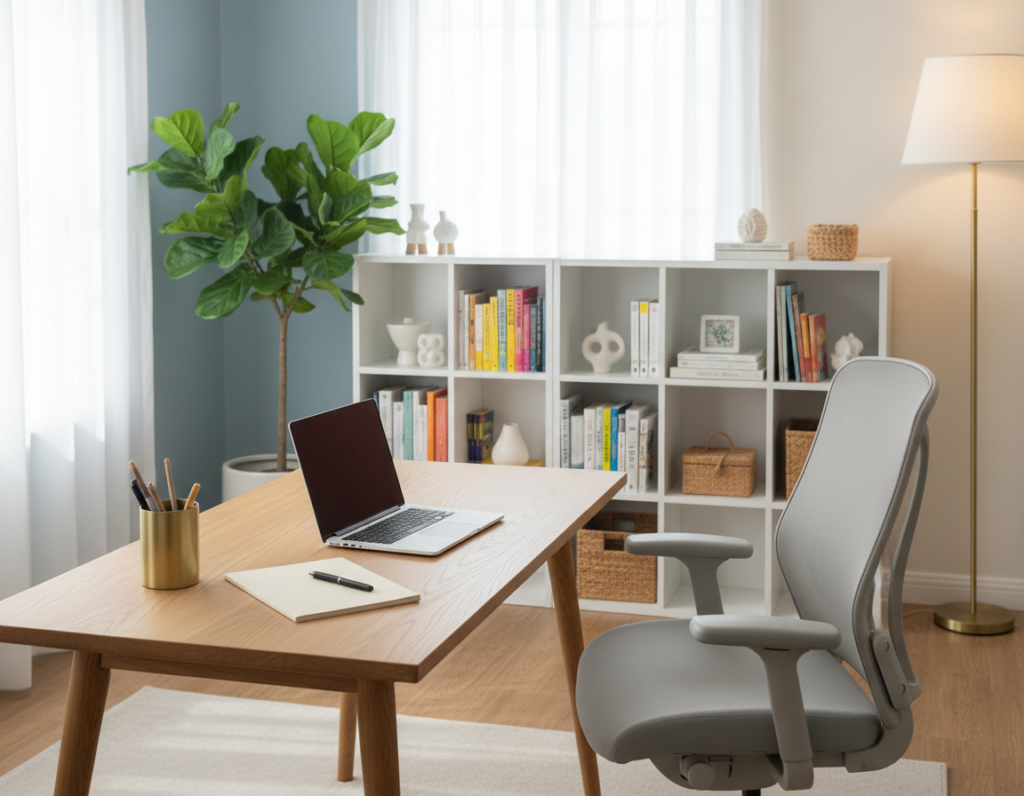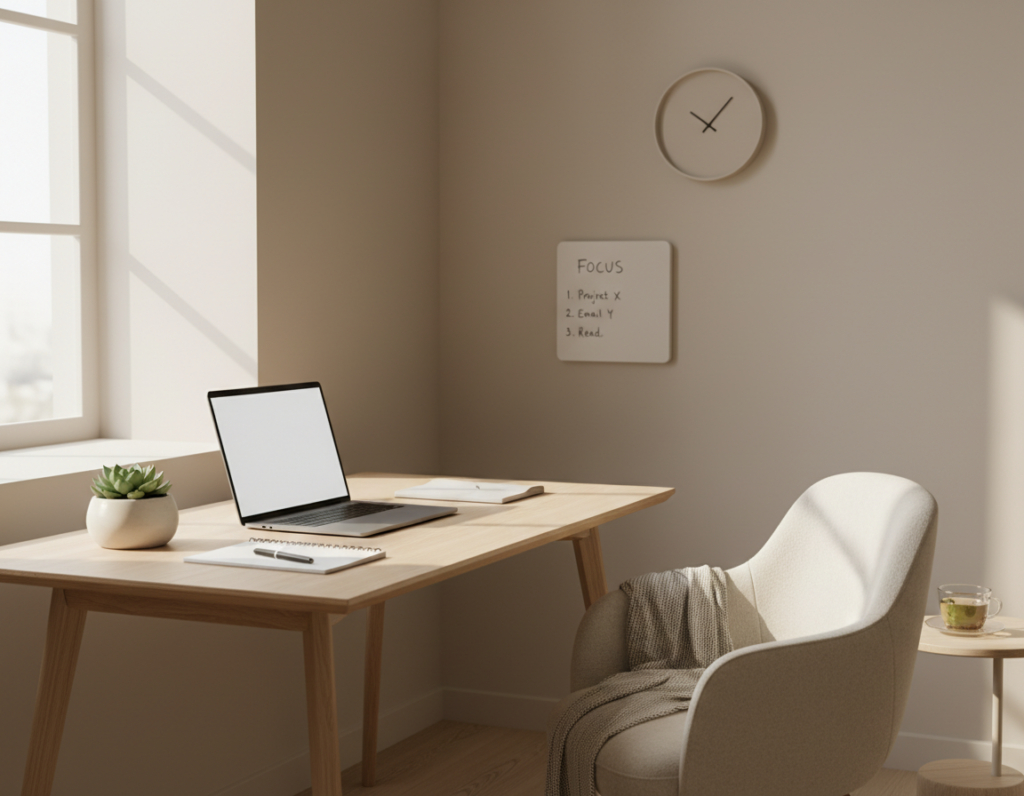
Remote workers with ADHD need a clear workspace that supports focus and reduces distractions. A tidy desk setup helps keep a laptop, display, and essential device within reach while cutting mental clutter. This simple change can boost daily productivity and comfort.
The Focus by MDS Chrome extension adds a timed Pomodoro routine and an easy to-do list that guides attention through the work day. Combining that tool with a compact desk or minimal desk keeps tasks and time visible.
A proper station includes a dedicated drawer for storage, a clean desktop area, and a clear side for work flow. When arranged with purpose, a table or computer area supports style and function. The right arrangement turns limited space into a productive, comfortable place to complete complex projects and daily tasks.
Understanding the ADHD Remote Work Environment
Remote workers with ADHD benefit most from a workspace that limits visual noise and supports quick task resets. Clear zones and predictable routines make it easier to start work and finish tasks during the day.
Clutter drains attention and steals time. Rochelle McNally in Georgia turned a tiny room into a zen zone to concentrate better and protect her productivity.
“A clutter-free home office is essential for ADHD workers to maintain focus and productivity,”
Defining Your Setup Type
There are three main setup types: Everyday, Home Office, and Gaming. Each station serves different needs for storage, ergonomics, and screen use.
- Choose a compact desk to limit items and cut decision fatigue.
- Pick a chair that supports long hours; ergonomics matter for comfort.
- Organize laptop and display so less time is lost searching for tools.
Every small desk should be judged on how it supports specific tasks and storage needs throughout the day.
Essential Small Desk Setup Ideas for Focus
Storing nonessential gadgets out of sight creates a calmer environment for deeper, sustained work. Alex Napier Holland keeps headphones, microphones, and controllers in drawers so the surface stays clear and purposeful.
Minimal choices boost productivity. Emmie Villegas favors a moody, minimal desk aesthetic that highlights only a laptop and display. That limits visual clutter and makes it easier to start tasks each day.
Practical habits matter. A compact desk can still hold essential gear if everything has a home. This reduces time wasted searching for items and supports consistent desk setups that keep motivation high.
- Keep only what is used daily on the surface.
- Use drawers or bins to hide accessories and reduce clutter.
- Position laptop and display for quick glances and minimal strain.
- Set simple routines to reset the workspace at the end of the day.
Maximizing Vertical Space with Wall-Mounted Solutions
Vertical storage turns empty wall into useful real estate, freeing the surface for work that matters. Building up instead of out helps remote workers reclaim floor and surface area in tight home offices.
Floating Shelves and Cabinets
Floating shelves and wall-mounted cabinets let users stow gear within reach while keeping the surface clear. PJ Manalo in Manila built his office vertically to reclaim precious desk real estate in a high-rise condo.
Mounting a display and laptop to the wall frees the tabletop for notebooks, pens, or focused tasks. Rochelle McNally uses a wall-mounted desk to add legroom and preserve function in her tiny home office.
Every minimal desk benefits from vertical storage. The approach keeps tools organized and reduces visual clutter that can break concentration.
- Build vertically as a great way to maximize usable space for productivity.
- Use floating shelves to keep frequently used items within reach without crowding the surface.
- Mount electronics on the wall to free the desktop for high-value work.
For more wall storage options, see office wall storage ideas to adapt systems to a minimal desk setup that supports long work sessions.
The Role of Natural Light in Productivity
Placing a workstation next to a window fills the workspace with natural light and can change how someone feels while they work. Daylight improves mood and helps sustain focus during long tasks.
A minimal desk near a window benefits from warmth and visual relief. That light reduces strain and often boosts overall productivity.
For evening hours, a clip-on or adjustable lamp provides targeted lighting so work can continue without losing momentum. Good lighting keeps routines consistent and makes the area more inviting.
- Natural light is a powerful tool for mood and attention in tight work areas.
- Positioning your desk by a window is a simple way to add daylight to daily habits.
- When daylight fades, an adjustable lamp gives the focused light needed to finish tasks.
- Every setup should use available light to keep the workspace bright and calm.
Integrating daylight into a minimal desk arrangement supports calm focus and helps ADHD workers stay alert during their workday.
Selecting the Right Desk for Your Needs
Prioritize a sturdy surface that offers enough depth for your laptop, display, and peripherals. Measure your room before buying so the table fits without crowding the space. A proper choice reduces distractions and supports consistent work each day.
Material Durability
Choose materials that resist wear and hold weight. Solid wood, steel frames, and quality laminates last longer and feel stable during standing transitions.
The VIVO Electric Stand-up Desk Frame is a noted option for people seeking reliable height adjustment and long-term ergonomics.
Dimensions and Depth
A minimum depth of 60cm (2 ft) ensures enough room for monitors and essentials on the desktop. If floor space is tight, a standing desk converter can add standing benefits without replacing the whole table.
- Confirm width and depth so a laptop and display fit comfortably.
- Look for a model with a built-in drawer for quick storage and a cleaner desk setup.
- Match height range to your chair and body for proper ergonomics throughout the day.
Ergonomic Principles for Long Work Sessions
Sustained concentration is easier when the body is supported by thoughtful ergonomics. Ergonomics help reduce fatigue and keep attention steady during long hours of work.
Kiboorou, a product designer in Singapore, stresses that a quality chair is the top investment for any home office. A proper chair supports the lower back and makes long tasks less painful.
Monitor height matters. Position the top third of the screen at eye level so the neck stays neutral. This reduces shoulder strain and keeps focus on tasks.
A minimal desk can still honor ergonomic rules. Keep keyboard and mouse close, set chair height so feet rest flat, and allow short movement breaks every hour.
- Ergonomics preserve health and comfort during extended work.
- Tailor each desk and chair to your body to avoid chronic pain.
- Correct height and alignment improve concentration on complex tasks.
Managing Cable Clutter for a Clear Mind
Taming cords reduces visual noise and helps users focus. Organized wiring makes the work area feel calmer and more professional.
Cable Trays and Management Boxes
The IKEA Signum is a popular cable tray that keeps power and data lines off the floor. It routes laptop and display cords under the tabletop, so cables stay hidden and reachable.
Using cable management boxes is a great way to hide power strips and preserve a minimal desk aesthetic. Each device should have a planned route to avoid tangles and interruptions.
- A clean cable plan is a great way to keep visual clutter low and increase focus.
- Mount a tray like the IKEA Signum to consolidate cords and free floor space.
- Use management boxes to store power strips and bulky plugs out of sight.
- Label or color-code cables so each device reconnects quickly after changes.
- Proper routing makes daily resets fast and keeps multiple desk setups consistent.
“A clean desk is a clear mind,”
Proper cable management supports productivity and keeps storage tidy. When cables stay organized, the workspace serves work—not distractions.
Choosing Wireless Peripherals for Minimalist Aesthetics
Wireless peripherals clear the surface and make the work area look intentional and calm. A wireless keyboard and mouse remove cords that break visual flow and reduce distractions for ADHD remote workers.
Selecting cordless gear also supports the visual character of a minimal desk. It creates clean lines and makes daily resets faster. High-quality wireless tech now matches wired reliability for video calls and long typing sessions.
- Cleaner style: Wireless devices keep the desktop uncluttered and professional.
- Better focus: Fewer cables mean fewer triggers for distraction and easier maintenance.
- Targeted lighting: An adjustable lamp adds the right light without reintroducing cable chaos.
“Investing in reliable wireless gear simplifies the workspace and saves time on upkeep.”
By choosing peripherals that match color and material, the entire workspace feels cohesive. This tidy approach to gear and lighting helps people remain centered on work rather than on the tools around them.
Integrating Smart Technology for Time Management
Adding timed tech and task apps helps people slice the day into manageable, clear blocks.
The Focus by MDS Chrome extension pairs a simple to-do list with a Pomodoro timer. It helps ADHD remote workers map work sessions and breaks so tasks feel less overwhelming.
Digital Timers
Digital timers give a visible cue for how long to work and when to rest. A timer on a smart speaker or phone keeps interruptions low and makes transitions predictable.
Productivity Software
Tools like Notion or ClickUp turn chaotic notes into tracked projects. They sync task lists across a laptop and a display so priorities stay clear.
Smart lighting and voice control add hands-free convenience. Amazon Alexa can start timers, change lighting scenes, or read reminders without breaking flow.
- Use tech to simplify routines and protect focused time.
- Integrating smart devices is a practical way to lift productivity and manage tasks.
- A minimal desk setup can include timers, software, and lighting without adding clutter.
“A well-integrated workspace uses technology to simplify the workflow, allowing you to focus on what truly matters.”
Utilizing Multi-Functional Furniture for Small Rooms
Clever furniture choices let a single room handle living needs and productive work without crowding either purpose. Multi-functional pieces make transitions simple and reduce the urge to spread work across the home.
Raymond Cripps in Australia used a loft bed to create ample room for a full-sized desk and workspace below. That approach frees floor area and gives a clear zone for focus. Using vertical volume is a practical way to reclaim space.
Fold-down tables, storage ottomans, and convertible units let a compact desk double as storage or a surface for other tasks. A compact desk that stores supplies keeps a minimal desk tidy and usable every day.
Choose items that move or fold away so the living area adapts to changing needs. Planning the layout carefully ensures the work zone fits without sacrificing comfort or style.
Benefits at a glance:
- Maximizes available space in a tight room.
- Lets one piece perform multiple roles for better organization.
- Supports clean desk setups and reduces the need for extra furniture.
Creating Dedicated Zones for Different Tasks
Marking separate zones in a room helps the brain know when it is time to focus and when to relax. Clear boundaries reduce distraction and make transitions easier for ADHD remote workers.
Separating Work and Play
Define a working area that holds only work tools. Alex Napier Holland in Portugal keeps a dedicated corner for creative and professional tasks so he can start with purpose.
Balance matters. Raymond Cripps split his room into halves: one side for his desk setup and the other for a PlayStation and TV. That split encourages him to leave work behind when he moves to the leisure side.
- Creating dedicated zones is a great way to separate work from play and protect focus.
- A minimal desk can be part of a larger room plan that clearly defines where you work and where you relax.
- Use furniture as boundaries—shelves, rugs, or a couch can mark a different space without walls.
- Position every small desk to support work-life balance so each area has a clear purpose.
- Organized desk setups by task prevent clutter and help the brain switch roles quickly.
“A well-planned workspace lets you focus when you are at the desk and disconnect when you are not.”
Incorporating Nature to Boost Mood
Natural elements like potted plants and daylight provide simple cues that signal the brain to relax and focus.
Indoor plants not only purify the air but also brighten the work area and raise energy. Adding a few low-maintenance greens makes the space feel calmer and more alive.
Petar in Perth built a WFH garden pod to escape household noise. His garden pod became a sanctuary that supports productivity and mental well-being. This approach shows how a dedicated nook with plants and natural light helps sustain focus.
A desk setup that includes nature feels more inviting. Even minimal desk arrangements gain warmth from a single plant or a sun-facing window. The combined effect of plants and good lighting helps reduce stress during busy days.
- Incorporating nature into your workspace is a great way to boost mood and focus.
- Every small desk benefits from a bit of greenery as a visual break from a laptop and display.
- Use natural light and plants to make the space feel connected to the outdoors.
“A touch of green changes how you work—calmer, clearer, and more steady.”
Personalizing Your Workspace for Inspiration
Personal touches turn a functional workspace into a source of daily motivation. Thoughtful accents help the user feel grounded and ready to work. These choices make the area inviting without adding clutter.
Using Plants
Greenery adds life and calm. A single potted plant on the corner softens the surface and improves air quality.
Rochelle McNally arranges low-care plants next to her mementos to keep the space both tranquil and organized.
Displaying Pictures
Photos and framed prints turn a wall into a source of meaning. Pictures of family, travel, or milestones can spark focus and steady mood.
Rochelle uses England mementos and photos to add a personal touch that inspires her day.
Adding Artwork
Artwork lets people express taste without crowding the surface. LED strips and collectibles can highlight a favorite piece.
Gerwyn Manuel uses lighting and select collectibles to make his battlestation uniquely his own while keeping the overall setup clean.
- Personalizing with pictures and art helps the desk feel like a place you want to be.
- A minimal desk can still reflect personality through careful choices.
- Every small desk should inspire focus and creative work each day.
Maintaining a Clean Desk Routine
A daily wipe-down keeps the work surface ready and reduces distracting clutter.
Start and end the day with two quick moves: clear loose papers and wipe the table with a damp cloth. This removes dust and crumbs and makes the space feel fresh.
They should also clean frequently touched items. Use wet wipes for the keyboard and mouse to cut germs and keep the computer tools working smoothly.
Consistent habit matters. Spending five minutes each evening to tuck cords into a drawer and place the laptop on a stand creates a station that stays usable for urgent tasks.
- Maintaining a clean desk routine is a great way to protect productivity and reduce visual clutter.
- A minimal desk setup needs regular care so lighting, ergonomics, and comfort stay optimal.
- Organized storage and a labeled drawer make finding items fast and save time during the day.
“A tidy workspace supports focus and keeps energy for the work that matters.”
Budget-Friendly Upgrades for Your Home Office
Smart, low-cost swaps can dramatically improve comfort and focus without breaking the bank. Start with proven, affordable pieces and add ergonomic touches as funds allow.
The IKEA Linnmon with Adil legs is an economical option for someone building their first small desk setup. It creates a clean surface and leaves room for a monitor and a laptop.
For more storage on a budget, the IKEA Karlby top paired with two Alex drawers delivers generous capacity while staying cost effective. That combo turns limited space into practical, organized real estate.
A standing desk converter is an affordable way to add standing benefits without replacing the whole desk. It keeps posture options flexible and supports longer comfort during the day.
- Choose pre-loved or modular pieces to stretch the budget.
- Prioritize essentials: a stable surface, storage, and a way to alternate between sitting and standing.
- Invest over time so upgrades match real work needs.
“A well-planned budget setup can be just as effective as a high-end one, provided you prioritize the essentials.”
Conclusion
Smart organization and a few ergonomic choices let one transform a tight area into a reliable workspace. Prioritizing vertical storage, clear routines, and a pared-down desk setup helps reduce distractions and improve focus for ADHD remote workers.
, Investing in a quality chair or a standing option supports health during long hours. Add personal touches and use the wall for storage so the space stays functional and inviting.
With consistent maintenance and the right desk setups, any corner can become a professional home office that boosts productivity and wellbeing each day.