Design that fits the person can spark joy and boost output. Schroder notes that tailoring an office style to the individual helps sustain motivation and focus throughout the day. Small, deliberate choices change how a person approaches tasks and breaks up mental clutter.
Punteha van Terheyden emphasizes a clear boundary between work and life. A dedicated home office helps the brain switch into a productive mode and makes it easier to finish daily tasks. This separation is vital for those with ADHD who benefit from structure.
When a person loves where they work, engagement rises. Organizing an office space or converting a corner of a living room or spare room into a focused hub can lift clarity and reduce distraction. A few intentional edits to a home area create a sanctuary that supports daily performance.
Key benefits: better mental clarity, clearer work boundaries, and a more motivating office space that helps balance professional and personal life.
Essential Elements for a Comfortable Workspace
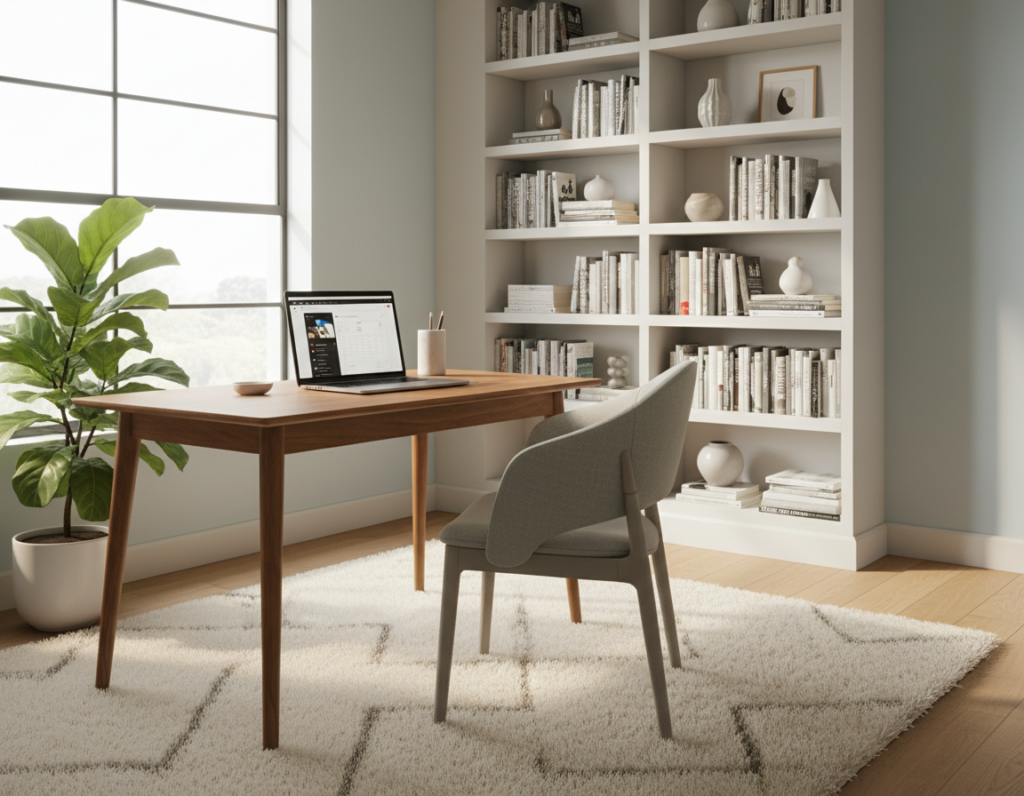
A functional room starts with the right desk and deliberate storage so clutter never hijacks focus. Schroder recommends a spacious desk and ample storage that hides printers and paper behind cabinet doors. This keeps the living room or dedicated home office calm and orderly.
Choose a sturdy wood desk that suits the room’s scale. Built-in cabinets or closed shelving offer practical storage solutions. A clean surface reduces visual noise and helps the mind stay on task.
Lighting and seating requirements
Good lighting makes long hours sustainable. Feldman recommends task lighting to cut eye strain and a supportive desk chair to protect posture.
“High-quality task lighting and an ergonomic chair are absolute must-haves for any functional home office setup.”
Consider a gallery wall as Oholendt suggests to create a polished background for virtual calls. Thoughtful office design blends function and personal style so the setup feels like an extension of home, not a cubicle. For more on shaping a space you enjoy, see home office.
Finding the Perfect Location for Your Desk
Placing a desk in the right part of the house can transform an underused area into an efficient home office. A focused spot helps the mind switch to work and reduces interruptions.
Size matters: Oholendt recommends an 8×10 feet room for a built-in desk. If a floating desk is preferred, plan for about 10×13 feet to allow movement and storage.
Adams found success converting an unfinished attic into a dedicated office. That shows how an unused room or alcove can become a private, productive area in the home.
- Pick a corner of the living room only if it stays clear of high-traffic paths.
- Choose a quiet alcove or small room for better privacy and focus.
- Check natural light and accessibility before installing a permanent desk.
- Arrange the layout to make the most of available square footage.
By planning where the desk goes and evaluating flow, light, and size, one can create practical home office ideas that fit daily needs and support long hours of work.
Optimizing Your Layout for Focus
Floating a desk changes how a room flows and can sharpen focus in a busy home. Placing the desk away from a wall creates a central anchor that makes the office feel intentional and open.
Oberhauser recommends a floated desk in larger home office spaces because it creates a strong focal point that supports daily productivity.
Why it works
- A floating desk separates work from the lounge or living room, helping the brain switch modes.
- Positioning the desk away from the wall opens the floor and prevents the room from feeling cramped.
- It suits laptop users and modern furniture design, keeping the setup light and mobile.
- Consider the back of the desk if it’s visible; a finished back or slim storage keeps the rest of the home tidy.
- Pair floating shelves above to add vertical storage solutions and reduce clutter.
Practical note: test lighting, chair ergonomics, and available surface area to match daily task needs and boost productivity.
Ergonomic Supplies to Reduce Physical Strain
Selecting the right input devices and screen height prevents strain over long shifts. Small changes to a home office can cut neck and wrist pain. These fixes make the room easier to use for hours at a time.
Mouse and Wrist Support
Punteha van Terheyden favors an upright mouse paired with a mouse mat that has wrist support. This combo reduces forearm twist and keeps the wrist neutral.
Choosing the right mouse helps limit repetitive strain and improves control for longer tasks in the workspace.
Monitor Risers for Neck Health
A monitor riser raises the screen to eye level and removes the need to tilt the head. Punteha found it essential after a car crash that caused recurring neck pain.
Using a riser also frees desk surface by storing small supplies beneath the monitor. It is a simple office supplies upgrade that yields big benefits.
- Invest in ergonomic furniture like a supportive chair to protect posture.
- Ensure proper desk height to limit shoulder and back strain.
- Organize essentials on the riser to save surface area and keep the room tidy.
- Improve lighting and add brief stretch breaks to reduce fatigue.
Applied together, these ergonomic steps let a living room or dedicated home area feel healthier and more durable for daily work. Prioritizing body-friendly equipment helps people stay productive and pain-free.
Incorporating Comfortable Workspace Ideas for ADHD
Making a home office that reduces distraction starts with simple, personal touches that keep attention steady.
Minimize visual clutter by choosing clean storage and flexible furniture. Closed shelving, a slim filing cabinet, or a small credenza helps keep the room calm and focused.
Dr. Meg Arroll recommends adding playful accents like quirky desk accessories or inspiring artwork to boost mood. A touch of vibrant color or a single eye-catching piece can stimulate creativity without overwhelming the space.
Plan zones in the home so deep work happens in a quiet corner away from the living room traffic. Use adjustable lighting and a quality chair to support long sessions of work.
- Flexible lighting: mix task lights and soft ambient light to adapt to tasks.
- Furniture that moves: choose pieces that rearrange easily for standing or seated work.
- Personal decor: add meaningful items to keep motivation high.
When a room balances order and personality, it becomes an office space that supports focus, mood, and daily routines.
The Role of Natural Light and Task Lighting
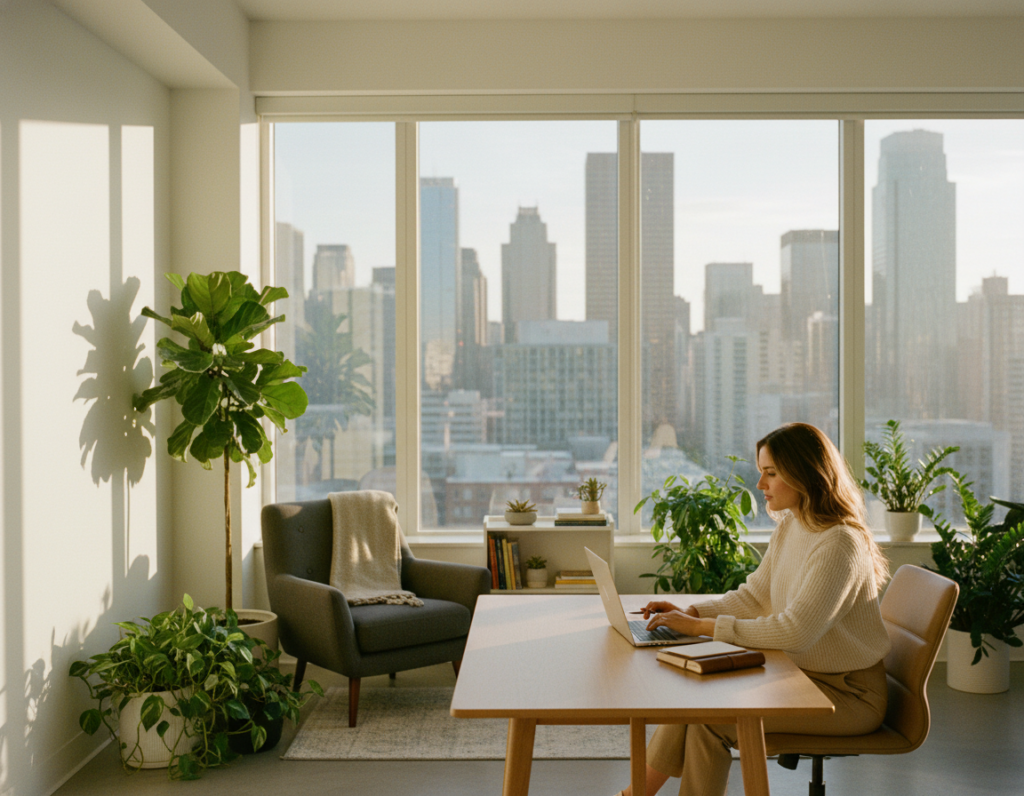
Natural daylight shapes mood and sharpens attention in any home office. It helps regulate energy and supports focus during long stretches of work.
Window placement matters. Oberhauser suggests that whether the desk faces a window or sits to the side, having a view keeps the office feeling open and refreshed.
Window Positioning for Productivity
Position desks to control glare so screens stay easy to read. Proper placement reduces eye strain and keeps tasks moving without interruption.
“Pools of soft accent lighting often work better than harsh overhead lights.” — Hebe Hatton
- Maximize natural light to boost mood and productivity in the home office.
- Use task lighting for dark mornings and late evenings when natural light is low.
- Plan light direction to avoid glare from windows on screens in a living or small office corner.
- Mix soft accent lamps with focused task lighting to create a calm, efficient space.
A well-lit office is more inviting and helps people stay engaged for longer. Thoughtful lighting design makes small rooms feel airy and more usable for daily work.
Selecting a Calming Color Palette
A serene paint choice can quietly set the tone for productive days in a home office.
Adams used Blue Bayou by Benjamin Moore to create a peaceful retreat. The shade shifts between day and evening, giving the room a steady mood that supports focus.
Pew recommends neutrals and tactile finishes like limewash plaster, burl wood, linen, and leather. These textures pair with a soft palette to make a living area feel like a calm sanctuary.
Choose colors that speak to the rest of the home.
- Select one main wall color and two accent tones to keep the office cohesive with adjacent space.
- Match furniture and decor to the palette so pieces feel intentional, not random.
- Test samples on different walls and at various times of day before committing.
Result: a thoughtful palette reduces visual stress and makes the office a calm, stylish part of the home.
Creative Storage Solutions to Minimize Clutter
Well-planned storage keeps the desk clear and makes the room easier to use each day.
Smart storage turns a small home office into a calm, functional area. Choosing furniture that hides items reduces visual noise and helps people finish tasks faster.
Built-in Bookcases
Built-in bookcases frame an office inside a living room without closing it off. They add vertical storage for books, files, and office supplies while keeping the floor open.
Framing the desk with shelves creates a tidy focal point and supports an organized setup that looks intentional and polished.
Hidden Storage for Visual Clarity
Punteha van Terheyden used a sturdy blue sideboard from Amazon to store work items out of sight. A closed sideboard is ideal when the room doubles as living space.
- Dual-purpose furniture: pick pieces that offer drawers or cabinets for supplies and small electronics.
- Attractive baskets: use boxes or baskets on lower shelves to corral cords, chargers, and small office supplies.
- Desk zones: assign one drawer for daily items and one for rarely used supplies to keep the surface clear.
These solutions help establish a clean boundary between work and home life. With a place for every item, the office design stays functional and the room looks like part of the home decor.
Using Biophilic Design to Boost Productivity
Biophilic touches bring the calm of nature into an office and lift attention in small rooms.
Potarazu applies neuroaesthetics and biophilia to create a soothing office that supports cognition and calm.
Natural materials like wood and stone, paired with plants, reduce stress and make the room feel restorative.
Rachel Bull recommends snake plants and umbrella plants for small home spaces. They are low-maintenance and help purify the air.
“Even small touches of nature can reduce stress and improve focus.”
- Boosts productivity: adding greenery and natural light supports sustained attention.
- Softens design: choose furniture and color in warm, natural tones for harmony.
- Visual interest: plants break up screen time and make living room offices feel inviting.
Regular plant care can be a short, grounding break that refreshes concentration. Done well, biophilic design makes the home office feel like a peaceful part of the home, not a clinical room.
Personalizing Your Space with Meaningful Decor
Meaningful decor can turn a neutral room into a place that fuels calm and focus. Small, personal choices give the home office a clear personality without adding clutter.
Photos and personal mementos offer quick mental reprieves. Punteha van Terheyden finds it soothing to glance at images of loved ones during stressful tasks. These moments of connection help reset attention and restore energy.
Gallery Walls for Inspiration
A well-composed gallery wall makes a desk area feel intentional. Shea McGee’s Target collection provides affordable prints that add personality without overwhelming the room.
- Choose a simple color palette for frames to keep the look cohesive with home decor and living room finishes.
- Place lighter pieces near the chair so the eye rests easily during breaks.
- Surround functional furniture with items that bring joy to support a positive mindset at work.
Design that reflects taste and history makes the office a true extension of one’s living space. Prioritize decor that inspires; it helps push through boring tasks and keeps goals in view.
Integrating Sensory-Friendly Fragrance
A subtle, consistent scent can anchor attention and ease transitions between tasks in a home office.
ScentAir non-toxic fragrance sticks, like Golden Bamboo, offer a delicate, refreshing aroma that scents a room without overwhelming it. These sticks reduce the risk of irritation because they avoid harsh chemicals.
Dr. Meg Arroll explains that scents can trigger emotion and memory, making them a powerful tool to personalize an office and shape mood.
- Use lavender or bergamot to lower anxiety and lift mood during long tasks.
- Pick a scent that recalls a peaceful moment to help stay centered and productive.
- Choose non-toxic options so the room remains a healthy place for daily work.
- If the living room or shared space is used, confirm scents suit others to keep it pleasant for everyone.
“Scent can act as a simple cue: familiar aroma, time to focus.”
Result: a pleasant-smelling office makes the room feel welcoming and helps the home feel more intentional for work.
Establishing a Routine for Workspace Maintenance
Scheduling small maintenance tasks keeps the home office clean and the mind uncluttered.
Quarterly declutter: Schwartz recommends a seasonal sweep to remove excess items and reset the room. A focused, quarterly session prevents accumulation and saves time later.
Daily habits matter too. They make mornings easier. Wiping the desk and organizing the laptop area takes five minutes but starts each day with intent.
Categorize by use: Oberhauser suggests grouping equipment and supplies by frequency. Keep most-used items near the chair and store lesser-used items in drawers or boxes.
- Set one weekly tidy block to sort mail, charge devices, and clear surfaces.
- Do a quarterly purge for paper, cables, and duplicate items.
- Maintain furniture and lighting checks so the office space stays functional.
“A brief routine prevents clutter from becoming a barrier to focus.”
Result: a simple, consistent maintenance plan keeps the home room ready for work and protects the separation between personal life and professional time.
Designing Multipurpose Zones for Flexibility
A single room can serve multiple roles when zones are planned around task, rest, and focus.
Practical zoning breaks a home office into clear areas: a desk for focused work, a lounge chair for short breaks, and a reading nook for deep thinking. This approach helps people move through the room without standing up and leaving the space.
One popular living room solution is placing a desk behind the sofa. It frees floor area and keeps the work area distinct from the lounge point.
- Use multipurpose furniture so each piece supports both work and relaxation.
- Turn a corner of the room into a quiet task area for laptop work and focused calls.
- Introduce a small palette of color and wood finishes to tie zones together.
- Plan natural light and layered lighting so each zone reads as part of the same design.
Result: flexible zones boost productivity and make the office feel like a natural part of the home. Thoughtful layout and smart furniture keep the room functional as needs change.
Conclusion
Balancing function and personal taste turns a common room into a practical office that supports work and well-being.
By choosing the right desk, chair, and lighting, the space reduces friction and protects physical health. Simple storage and a short maintenance routine keep the room tidy and ready each day.
Embrace flexible space planning and multipurpose zones so the home adapts as tasks change. Small, consistent edits to layout and design create a reliable place to focus.
Key takeaway: a thoughtfully arranged office becomes a calm sanctuary in the home, helping people manage tasks with clearer focus and less stress.