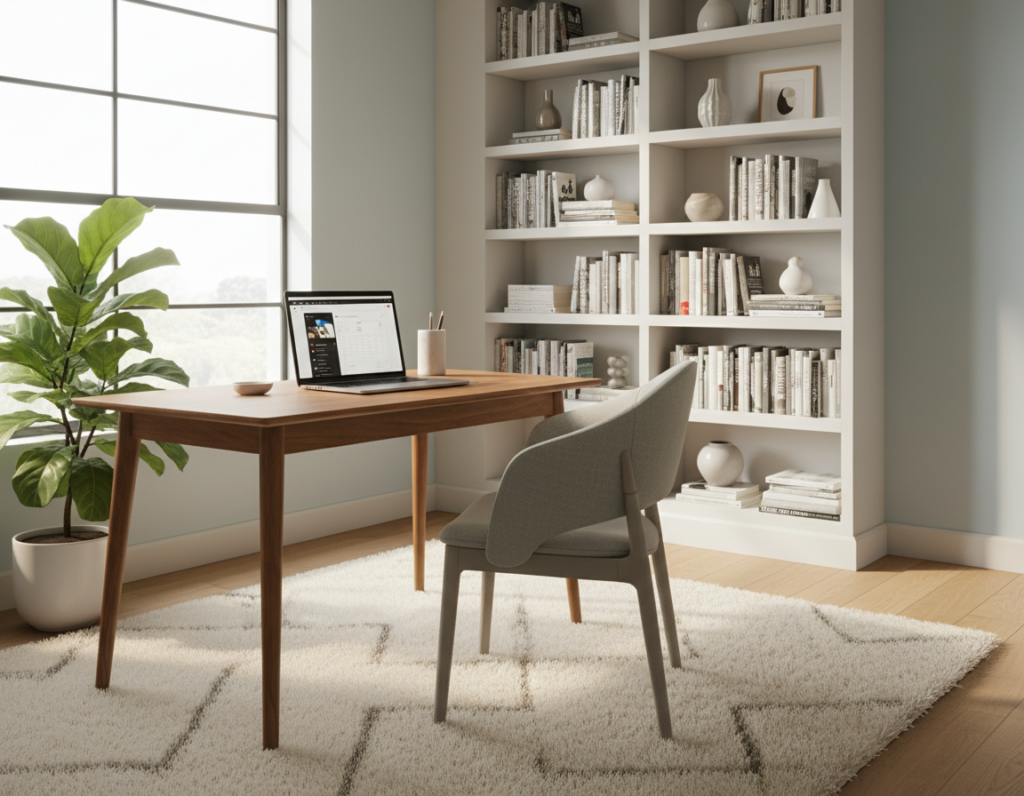
Remote work has changed how professionals set up their home office. They need tools that protect health and boost focus.
Investing in high-quality equipment can turn a simple area into an efficient hub. A few smart choices reduce strain and keep energy steady through long hours.
Proper desk accessories for comfort help prevent chronic pain tied to long stints of sitting. Ergonomic items also support posture and circulation.
Organized layouts and the right setup make it easier to stay productive. Many remote employees use a mix of tools to cut fatigue and improve output.
Professional ergonomic advice says the right configuration is the foundation of a sustainable remote career. Small upgrades often deliver big gains in health and performance.
The Importance of Ergonomics for Remote Workers
A well-tuned ergonomic setup prevents aches and keeps focus during the work day.
Ergonomics shapes how people feel in a home office. A quality chair and the right desk position cut strain and reduce the chance of back pain.
Companies like Google and Microsoft pick specific chairs to protect staff health. Google favors the Herman Miller Aeron. Microsoft standardizes the Steelcase Leap to keep posture steady and bodies supported.
- Set seat height so feet sit flat and knees form a 90-degree angle.
- Adjust lumbar support to match the lower back curve and prevent slumping.
- Position armrests so elbows create a 90-degree angle parallel to the desk.
- Keep monitor height and body position aligned to avoid neck strain.
- Check your workspace each day to maintain healthy angles and support.
Small changes to chair height, lumbar support, and arm position yield big returns. Proper ergonomics reduces pain and helps remote workers sustain focus across long shifts.
Essential Desk Accessories for Comfort and Productivity
A thoughtful selection of items helps workers move beyond generic advice and solve real pain points.
Building an ultimate ergonomic workspace means matching tools to posture, routine, and health needs. Small, targeted changes prevent strain and keep focus during long hours of work.
A poorly configured desk setup often costs people time and productivity. Pain, distraction, and lost concentration add up faster than gear expenses.
- Choose an accessory that supports natural posture and reduces repeated motion.
- Use one or two key items to improve circulation and sightlines.
- Prioritize durability and adjustability to fit daily habits.
Research shows focused investments in the office yield measurable gains in health and output. This guide acts as a practical blueprint to pick tools that support the body and sharpen attention across the full workday.
Elevating Your View with Monitor Risers
A well-chosen riser turns clutter into storage and puts monitors at a healthy level.
Monitor risers lift the screen to eye height and free up space below for a keyboard or laptop. They also help keep an office layout tidy and ergonomic.
Herdzi Monitor Stand with Drawers
The Herdzi stand costs $44 and includes two 10×10 inch drawers that are 1.5 inches tall. It has slots for pens and a cutout to hold wireless earbuds.
It is sturdy enough to support a 49-inch ultrawide monitor without wobble, so users can set the screen at the proper level for long hours of work.
Office Oasis Dual Monitor Stand
Office Oasis offers a 42 inch long dual stand priced at $80. It supports up to 100 lbs (45.4 kg) and comes in bamboo, black, or brown finishes.
This stand works well with multiple monitors or a heavier computer setup and lets one tuck away a keyboard or laptop when not in use.
- Herdzi provides compact storage while elevating a monitor to eye level.
- Office Oasis suits dual screens and heavier loads, keeping an office streamlined.
- Using a quality stand improves ergonomics and helps manage workspace accessories.
Improving Posture with Ergonomic Footrests
Supporting the feet correctly changes how the body sits and moves through long work sessions.
An ergonomic footrest moves the feet into a stable position that helps maintain neutral posture while seated. Brands like 3M and Fellowes popularized these items in offices to lower strain and keep circulation running during long shifts.
The FM300 is a solid option for users who want a firm surface with subtle movement. Some models add a rocking motion to encourage active sitting and boost blood flow. Proper use keeps thighs parallel to the floor and relieves pressure on the sciatic nerve.
- Feet support: A footrest helps the feet rest at the correct height and angle under the chair.
- Reduce back pain: Keeping thighs level reduces lumbar strain and prevents tucking feet under the seat.
- Adjustability: Set height and tilt to relieve pressure and encourage gentle movement.
For practical tips and research on under-desk foot rests, see this guide on the benefits of under-desk foot rests: under-desk foot rests.
The Role of Standing Desk Converters
Standing converters let workers alternate posture without replacing existing furniture. These units convert a standard surface into a sit-stand station and make movement simple during busy hours.
Standing desk converters help reduce prolonged sitting by allowing quick height adjustments. Big employers like IBM include Varidesk in wellness programs to lower back pain and improve posture.
Transitioning to Standing
Start slowly. Experts advise 15–30 minute standing sessions each hour and then increase time as the body adapts. Short intervals help prevent fatigue and support steady energy.
- A converter is a versatile accessory that turns a regular desk into a sit-stand workstation.
- FlexiSpot models are common in WeWork spaces, showing their value in shared environments.
- Alternating sitting and standing adds light movement, burns extra calories, and boosts focus.
Set the monitor at eye level and keep the keyboard at a comfortable position. This simple setup preserves good posture and gives the lower back extra support while standing.
Typing Comfort with Ergonomic Keyboards
Choosing the right split or curved keyboard makes long typing sessions less taxing. Ergonomic layouts—split, curved, or tented—help hands rest in a more natural position and reduce awkward finger angles.
Microsoft Sculpt is common on developer workstations and is praised for lowering wrist strain. The Logitech Ergo K860 saw wide adoption among remote workers seeking better typing comfort and posture.
Experts recommend two to four weeks to adapt to a new layout. During that time, users should focus on keeping the wrist straight and floating the wrists above the surface or palm rest.
- Reduce strain: The Sculpt helps stabilize the wrist to lower fatigue.
- Adopt slowly: The K860 eases the transition to a split layout.
- Pair gear: Combining an ergonomic keyboard with a compatible mouse creates a healthier desk setup.
Tip: Practice short typing sessions and pause often to protect the wrist and maintain the best typing angle. For related workstation tools and guidance, see this ergonomic resource at workstation gear.
Reducing Wrist Strain with Specialized Mice
Specialized mice reshape common hand positions to cut wrist strain during long screen sessions.
Many Adobe designers favor the Logitech MX Vertical to keep a neutral wrist angle during creative work. Its grip reduces the twist that often leads to wrist pain.
CAD users often choose the Evoluent VerticalMouse. That model supports precise movement while lowering wrist fatigue in mouse-heavy tasks.
An ergonomic mouse follows the hand’s natural curve and prevents the unnatural rotation typical of standard mice. Experts advise placing the mouse close to the keyboard and at elbow height to avoid reaching and shoulder strain.
- Logitech MX Vertical helps designers maintain neutral wrist posture during a long day.
- Evoluent VerticalMouse reduces fatigue for CAD and precision workflows.
- Use a specialized mouse with a laptop stand and ergonomic keyboard to create a protective setup.
Tip: Alternate between different mouse styles across the day to spread muscle use and lower the chance of repetitive strain injuries.
Optimizing Sightlines with Monitor Arms
Using an adjustable arm gives precise control of screen distance and tilt to match each user’s posture. Monitor arms from brands like Ergotron and Humanscale are common on trading floors and in the home office because they deliver repeatable results.
A proper arm positions the screen about 20–26 inches from the eye, roughly an arm’s length. Tilting the panel back 10–20 degrees reduces glare and improves the viewing angle.
Lifted screens free up the desk and create a cleaner workspace. Removing the monitor base also makes it easier to place keyboards and wrist supports where they belong.
- Reduce neck and back pain: Set the monitor at eye level to avoid hunching.
- Protect the eyes: Keep the display an appropriate distance to limit strain and maintain clarity.
- Improve posture: Fine adjustments let users find the best position and tilt angle for long sessions.
In short, a quality stand and arm system offers reliable support and a flexible setup that elevates both focus and health in the office.
Enhancing Focus with Task Lighting
Task lighting shapes how well someone sees details and sustains focus during long sessions.
Choose a glare-free solution such as the BenQ ScreenBar. It mounts on the monitor and bathes the work area in even light without reflecting on the screen.
Architects and detail-oriented teams often prefer the Humanscale Element series. That lamp delivers precise illumination that eases eye strain during long design hours.
Place the task light to the side of the dominant hand to avoid casting shadows on paper or tools. Experts also recommend warmer tones (~3000K) in the evening and cooler tones (up to 5000K) during the day to match circadian needs.
- BenQ ScreenBar: glare-free monitor-mounted light that helps maintain focus at the desk.
- Humanscale Element: precision lighting often used in architectural studios to protect the eye.
- Position the lamp to the side of the dominant hand to prevent shadows on the work surface.
- Adjust color temperature by time of day to boost alertness and reduce fatigue.
- Ensure the light does not shine directly onto the computer screen to avoid reflective glare and back strain.
Organizing Your Workspace with Document Holders
A well-placed document holder keeps paper and screen work in one smooth glance.
3M and Fellowes make document holders used in medical and accounting office settings to speed transcription and reduce errors. These units sit at eye level so users don’t look down and lose posture.
An in-line holder that fits between the keyboard and monitor creates a seamless visual field. Put the holder at the same height and distance as the screen to avoid repeated neck turns.
“Keep documents at the same plane as your screen to maintain focus and reduce strain.”
- Brand pick: A 3M or Fellowes holder is a practical accessory when referencing papers while working on the computer.
- Use a line guide: A simple rule sheet helps track lines and speeds data entry without losing place.
- Placement tip: Align the holder so the paper and screen share one visual plane, roughly a few inches from the monitor.
Result: Integrating a holder into the setup improves posture, reduces neck movement, and makes repetitive tasks faster and less tiring.
Supporting Your Wrists During Breaks
Resting the palms on a purpose-built pad during breaks reduces strain and helps maintain neutral posture.
Wrist rests from 3M, Fellowes, and Belkin come as gel or memory foam options to match personal preference. Use them primarily during short pauses, placing the palm on the pad rather than the wrist itself.
A quality memory foam wrist rest should feel firm enough to give support, yet soft enough to relieve pressure during a pause. That balance helps keep the wrist neutral and lowers pressure on the median nerve, which can cut long-term pain and fatigue.
Keep pads clean, especially in shared spaces; memory foam models soak up oils and dirt and need regular washing or wiping. A well-placed rest pairs well with a good chair and a proper stand to reduce reach and strain.
- Use palms, not wrists: lean on the pad during breaks to avoid strain.
- Pick firmness: choose memory foam that returns slowly and supports the hand.
- Hygiene: clean regularly to keep shared pads sanitary and effective.
“A short pause with proper palm support can prevent chronic wrist problems.”
Adding Movement with Balance Boards
Introducing controlled movement into a workstation helps reduce stiffness and boost blood flow.
The Original Balance Board blends a sustainable bamboo top with a sturdy base. It supports up to 350 pounds and suits users who want a durable surface while standing at their stand.
The Original
The design favors long use and steady support. It encourages subtle rocking that activates the core and eases back tension during long work sessions.
Level Balance Board
This model pairs a premium wood top with a die-cast aluminum base and supports up to 300 pounds.
“95% of surveyed participants reported feeling satisfied or very satisfied with their experience using the Level Balance Board.”
Plane Cloud Balance Board
The Plane Cloud uses recycled materials and adds a cushioned foam top. It supports up to 250 pounds and feels softer underfoot while still promoting small movement.
- Original: durable, bamboo surface, 350-pound capacity.
- Level: premium finish, robust base, high user satisfaction.
- Plane Cloud: eco materials and cushioned surface for gentler motion.
- Adding a board to a standing setup encourages micro-movement and improves circulation during work.
Managing Fatigue with Anti-Fatigue Mats
Anti-fatigue mats turn long standing sessions into manageable stretches by softening each step.
The B+Ground Anti-Fatigue Mat by FluidStance offers a cushioned surface that reduces fatigue during extended standing periods. It supports posture and lowers pressure on the feet and lower back.
The UPmat adds an extra layer when used with the Level Balance Board or The Original. It makes a balance session easier to sustain and helps users stay at the right height while they stand.
The Springboard blends a flexible wooden top with a felt frame to create a responsive bounce. That subtle motion promotes micro-movement and reduces stiffness during long hours at a stand station.
- B+Ground — essential mat for a standing desk that cuts fatigue and protects the lower body.
- UPmat — extra cushioning when paired with a balance board to extend standing time.
- Springboard — active mat with a responsive bounce that encourages better posture.
“A supportive mat can significantly reduce physical strain and make standing practical across the day.”
Investing in a quality mat is a simple, effective way to manage fatigue and preserve long‑term health when alternating between sitting and standing.
Conclusion
A thoughtful setup balances movement, lighting, and tool choice to reduce strain across the workday.
Creating an ergonomic workspace is a continuous process. Integrating a quality monitor stand, an ergonomic keyboard and a supportive footrest helps protect the back, wrist, and eye health during long laptop or computer sessions.
Small habits matter. Adjust chair height, set the monitor at eye level, tune the keyboard angle, and place the mouse close to the body to cut fatigue and pain. Good lighting and a clear surface preserve focus and reduce mistakes.
Over time, choosing trusted brands and making minor tweaks will keep the workspace at the right level and angle. That steady care pays dividends in comfort, posture, and long‑term productivity.