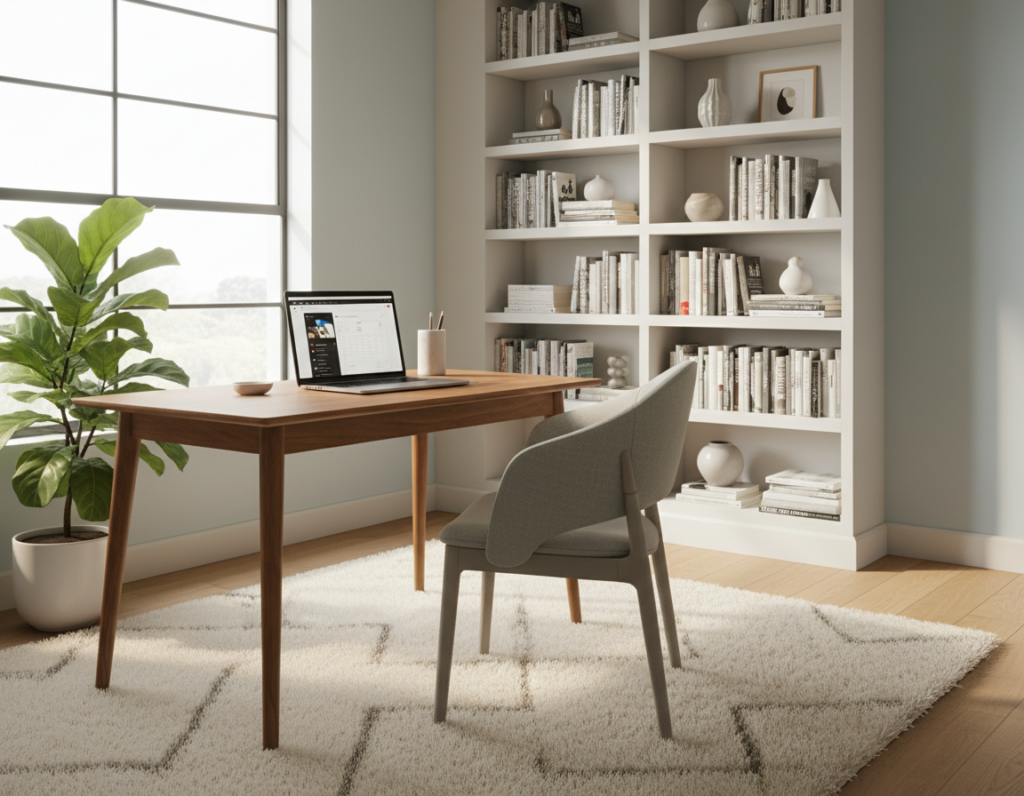
Finding the right desk chair makes a big difference when space is limited. The M57 series delivers a small footprint and a practical height range of 110–127.5 cm, so it fits many home setups without blocking light.
They tested dozens of options to spot models that balance support and minimal bulk. A well‑made office chair should give reliable seat support, breathable mesh backing, and a sturdy base with smooth wheels and swivel action.
For busy professionals in the United States, a chair small enough to slide under a desk keeps rooms tidy and usable all week. Good design and correct depth help transform tight spaces into efficient work areas.
Key takeaways: The M57’s adjustable height and mesh design combine comfort and space saving. Choose a model that tucks under the desk and offers a solid base for daily use.
The Ergonomic Challenge of Small Home Offices
Tight rooms make it hard to fit supportive seating without crowding the rest of the space. Many people end up choosing a bulky office chair that consumes floor area and reduces usable workspace.
The U.S. Occupational Safety and Health Administration warns that large, traditional furniture can feel like an intruder in a small home. That mismatched scale often leads to poor posture and long‑term discomfort.
Good design solves this by prioritizing a compact footprint with a strong base and a smooth swivel mechanism. A proper seat should offer real support while letting the user move freely on wheels without needing a huge room.
When the right balance is found, office chairs blend with home decor and improve daily use. Smart choices preserve space and comfort, keeping people productive and pain‑free.
- Choose a model with a small base and reliable wheels for tight spaces.
- Prioritize ergonomic support to avoid compromises that hurt long‑term health.
- Look for subtle design details that fit the room without dominating it.
Why Your Current Seating Might Be Hurting You
A poorly designed seat often forces the body into static positions that harm the spine over time. This is especially true for people who spend long stretches at a computer in a small home work area.
The Impact of Static Posture
The U.S. Occupational Safety and Health Administration identifies prolonged static postures as a key risk for musculoskeletal disorders. Sitting still for hours reduces circulation and strains muscles, tendons, and spinal discs.
Micro‑movements matter: a seating solution that allows small shifts helps keep blood flowing and cuts stiffness. Without that motion, neck and shoulder fatigue become daily issues.
Risks of Improper Support
When the back lacks proper support, the spine loses its natural curve and muscles tire faster. Over time, this leads to chronic pain and reduced comfort while at the desk.
- Prolonged static posture in an unsupportive seat can cause chronic pain, per OSHA guidance.
- Larger options do not always improve comfort; they can prevent sitting close to the desk and harm posture.
- Good design encourages movement, smooth swivel and reliable wheels that aid repositioning during use.
Choosing a seat that promotes mobility and correct back support reduces long‑term risk and improves daily use in small spaces.
Essential Features for a Compact Office Chair
The right mix of adjustability and ventilation keeps people productive in small rooms.
Industry standards from BIFMA recommend furniture that fits a wide range of users, from the 5th percentile female to the 95th percentile male. This means an ideal office chair needs real adjustments, not fixed parts.
The M57 series follows that guidance with a seat height of 45.5–55.5 cm and a depth of 46 cm. Those ranges help the seat fit many body types while preserving room space.
- Adjustable height and seat depth to match desk height and leg length.
- Lumbar support and an ergonomic office design that preserves the spine’s natural curve.
- Mesh back for breathability, a sturdy base, smooth wheels, and reliable swivel for easy repositioning.
Prioritizing height adjustable elements and lumbar support creates a desk chair that fits your body and your home. This approach boosts comfort and makes the most of tight spaces without sacrificing support for daily use.
Top Picks for Minimalist Workspaces
This selection highlights designs that tuck away neatly while delivering proven back support. It aims at people who need reliable seating that fits tight rooms and daily use.
Iconic Design Picks
Iconic styles often use a suspension back that moves with the user. That adaptive design saves space compared to bulkier, traditional office chairs.
They pair breathable mesh or refined leather finishes with a sturdy base and smooth swivel action for lasting comfort.
Budget-Friendly Options
For budget buyers, look for a model with a 360 swivel and durable leather office finish. It delivers premium features without a large footprint.
These choices keep wheels and a reliable base while staying affordable for home work areas.
Foldable Solutions
Foldable options measure about 70 cm D × 64 cm W × 98 cm H and offer surprising support for their size.
They work well in multipurpose rooms: the supportive chair back folds away for clean, clutter-free spaces.
- Suspension backs adapt to movement and save space.
- 360 swivel and leather finishes bring premium feel on a budget.
- Foldable seats store quickly for multipurpose room use.
Evaluating Mesh Designs for Breathability
Mesh backrests let air flow freely, cutting heat buildup during long workdays. This matters for anyone using an office chair for long sessions in a warm room.
Breathable mesh reduces sweat and keeps the seat more comfortable. It also delivers reliable back support while staying slim in overall design.
Many ergonomic office chair models use mesh to cut weight and bulk. Lighter chairs move easier on wheels and swivel smoothly, which helps people reposition without strain.
- Ventilation: Prevents heat buildup during focused work.
- Slim profile: Fits small rooms without sacrificing support.
- Mobility: Less weight improves movement and overall comfort.
Choosing a well-made mesh back can make chairs functional and pleasant even in tight spaces, delivering the comfort and support needed for long days at the desk.
Benefits of Armless Seating Solutions
Armless seating frees the user to move without obstacles, ideal for very small home work areas.
The armless PU leather office chair measures 52.1 cm D × 55.6 cm W × 90.9 cm H. This size helps the seat tuck beneath a standard desk and makes the most of limited space.
Maximizing Freedom of Movement
Removing armrests gives clear range for leg position and easy reach across a desk. Users who swivel or cross their legs gain notable comfort from the open sides.
A leather office model without arms often uses a 360 swivel and rolling swivel base for fast repositioning. Smooth wheels and a steady base keep movement controlled in tight rooms.
“An armless seat tucks away cleanly and keeps the room feeling open.”
- Fits under most desks to clear floor space at day’s end.
- Sleek design reduces the physical footprint of your office chairs.
- Recommended for anyone who values comfort and wants a desk chair that can disappear when not in use.
Selecting the Right Chair for Your Desk Height
Match seat height to your desk to keep feet flat and reduce strain during long work periods.
The height-adjustable model with a foot ring measures 68.6 cm D × 68.6 cm W × 125.7 cm H, making it ideal for tall desks and sit-stand setups.
Measure first: sit at your desk and adjust the seat so feet rest squarely on the floor and thighs are parallel to the ground.
A proper desk chair supports a 90-degree elbow angle while typing. Test the office chair adjustable settings until wrists and shoulders feel neutral.
Also check seat depth. Too deep a seat forces the user to lean forward; too shallow reduces thigh support. The right depth keeps the spine aligned and neck relaxed.
- Use a height adjustable model for hybrid desks to switch between sitting and standing.
- Confirm wheels and swivel move smoothly to allow micro-movements and repositioning.
- Choose a design that fits your desk height and room space to boost comfort and productivity.
“A chair matched to desk height is the simplest upgrade for better posture and longer focus.”
The Role of Lumbar Support in Small Chairs
Proper lumbar support targets the L3–L4 curve to stop slouching and ease spinal load. When pads or contours sit at that level, the spine keeps a healthy S‑shape and the user avoids forward collapse.
Effective lumbar support is non‑negotiable in any small office chair. It prevents lower back pain that builds during long work sessions and helps distribute weight evenly across the seat.
Look for a chair adjustable in height so the lumbar pad aligns with the user’s lower back. A correctly placed support reduces pressure on spinal discs and keeps posture neutral while typing at a desk.
A mesh back with integrated lumbar combines ventilation and firm back support for hours of comfort. Good design adds a reliable swivel and smooth wheels so micro‑movements are easy without losing alignment.
- Non‑negotiable: lumbar support prevents chronic pain.
- Adjustability: height or movable pads ensure correct placement.
- Material: mesh with targeted lumbar balances airflow and support.
“Proper lumbar alignment is the single best defense against lower‑back strain during long workdays.”
Why Adjustable Height Matters for Posture
Small changes in seat height often deliver the biggest gains in posture and comfort during a workday. The optimal range is 40–52 cm, which lets feet sit flat and knees form a 90‑degree angle. That baseline prevents hip and back strain.
A seat that moves up and down lets the user tune the backrest and depth to match body size. With the right height, thighs stay parallel to the floor and the spine holds a neutral curve. This reduces forward hunching at the desk.
- Foundation: adjustable height keeps feet flat and thighs parallel to the ground.
- Customization: a chair adjustable in height and backrest position fits unique body measurements.
- Complete support: add adjustable arms and lumbar support to maintain a neutral posture.
- Function: proper settings prevent hunching and help desk work with smooth wheels and swivel action.
- Health: the correct seat height lowers the risk of musculoskeletal disorders and improves all‑day comfort.
Choosing a height adjustable model is the simplest ergonomic upgrade that protects the back and boosts long‑term comfort.
Incorporating Active Seating Alternatives
Active seating options invite small, frequent movements that reduce stiffness during short desk sessions. A wobble base stool, sized 36 cm D × 36 cm W × 49 cm H and rated for 150 kg (330 lbs), fits small rooms and supports a variety of users.
These seats train postural muscles in a different way than a typical office chair. They encourage micro‑movement and help maintain focus during brief work blocks.
Use them in short intervals. Swap an adjustable height desk chair for a wobble stool for 20–40 minute bursts. This prevents long static sitting and eases stiffness.
- Engagement: active seats keep users alert during focused tasks.
- Support: they offer dynamic core activation rather than fixed lumbar padding.
- Space: the small design stores easily and complements tight home setups.
Active seating is not a complete replacement for a supportive desk chair. Instead, it pairs with a primary seat that offers wheels, swivel, and full back support for longer sessions.
Measuring Your Space for the Perfect Fit
Measure open floor behind the desk first—aim for 60–70 cm of clearance to allow easy movement in and out of the seat.
Start with the desk gap. Tape the distance from the desk edge to the nearest obstruction. This shows if wheels and swivel motion have room to work.
Account for full width. Check the overall width including arms or armrests, not just the seat listing. Some specs omit arm measurements and that causes surprises.
- Avoid a bulky back or backrest that makes a small home feel cramped.
- Measure desk depth so the seat depth leaves a 2–3 finger gap behind knees.
- Confirm height and leg clearance so feet rest flat and comfort is preserved.
Proper measurement keeps the new chair from overwhelming the space. It also ensures wheels, swivel, and support perform as intended without crowding the room.
“A simple tape-measure check prevents most fit issues and saves time on returns.”
Adapting to Your New Ergonomic Setup
Adapting to improved seating and support takes time as muscles relearn better posture. Expect simple discomfort at first; that is a normal sign the body is engaging core and postural muscles.
The Two Week Adaptation Period
Most people adjust to a new ergonomic office chair within one to two weeks. During this period the body unlearns old habits and accepts the lumbar and backrest alignment.
Tip: mild stiffness is common. It signals muscle retraining, not injury. If pain persists, consult a professional.
Progressive Sitting Strategies
Start with focused sessions of 50–75 minutes at your desk, then take a 5–10 minute active break. The World Health Organization recommends breaking long sedentary stretches with movement to reduce risk.
Follow the CCOHS sequence when you set up: adjust seat height first, then backrest, lumbar, arm position, and finally desk height. This ensures the chair adjustable features align with your work surface and body.
- Session plan: 50–75 min sit, 5–10 min active break.
- Setup order: seat height → backrest → lumbar → desk position.
- Listen to your body: take extra breaks and tweak settings for comfort.
“By listening to your body and taking regular breaks, you maximize the comfort and support of a new desk chair.”
Essential Accessories to Complement Your Chair
A few small add-ons can make a major difference in posture and long‑term comfort. These tools extend the function of a desk chair and create a complete ergonomic system for a small home work area.
Pull‑out keyboard trays free up desk space and help keep wrists neutral while typing. They reduce reach and prevent shoulder strain when paired with a chair adjustable in height and adjustable arms.
An ergonomic footrest supports shorter users who must raise seat height to match desk level. A height adjustable footrest encourages active sitting and improves circulation during long sessions.
- Monitor stand: raise the screen to eye level to cut neck strain when using a leather office or other premium seat.
- Adjustable arms: set arm height to keep elbows near 90 degrees and reduce shoulder load.
- 360 swivel footrest: supports micro‑movement and pairs well with wheels and a smooth swivel base.
Tip: combine an office chair adjustable features with these accessories for a balanced setup. Together they improve support, preserve desk space, and boost all‑day comfort.
“Additives like a keyboard tray and footrest are small investments that deliver measurable ergonomic gains.”
Maintaining Your Office Furniture for Longevity
Regular upkeep keeps a desk area reliable and extends the life of every moving part. A brief monthly check prevents small issues from becoming costly repairs.
Clean leather with a gentle cleaner and keep leather office pieces out of direct sunlight to avoid cracking and fading. They should also wipe spills quickly to protect the finish.
Inspect bolts and fasteners on the desk and chair. Tightening hardware keeps the swivel mechanism stable and prevents the 360 swivel from feeling loose.
Match wheels to flooring: soft casters suit hard floors and hard casters work better on carpet. The correct set prevents damage and ensures quiet, smooth movement.
- Check wheels: replace worn casters to restore smooth roll and protect floors.
- Test adjustable parts: the office chair adjustable features should move freely and hold height securely.
- Protect leather: avoid direct sun and use a conditioner annually for lasting comfort and appearance.
For a simple maintenance checklist and service tips, refer to the full guide — office chair maintenance checklist.
Avoiding Common Mistakes When Buying Online
Many shoppers focus on color or finish and skip the one step that prevents most fit problems: measuring the desk gap.
Measure twice. Tape the distance from the desk edge to any obstruction and confirm the full width including armrests. That check stops returns caused by a model that will not slide under a desk.
Look past photos. Verify seat depth, listed height range, and the 360 swivel or rolling swivel specs so the seat moves freely around a computer setup.
Pick light visuals. Neutral tones and mesh or cut‑out back designs keep a room feeling airy. If choosing a leather office piece, confirm adjustable height and lumbar support before buying.
- Confirm arm width so the seat fits small spaces.
- Check swivel action and seat depth for proper posture and comfort.
- Read warranty and return terms for home office chair purchases.
Simple checks save time and money. A careful measurement and a quick feature review prevent most online buying mistakes and ensure the new desk chair works with your setup.
Conclusion
A small workspace can still deliver full ergonomic support when selections focus on fit and function.
Choose a model that prioritizes adjustable height, correct lumbar placement and the right seat depth to match your body. This approach favors true support over extra bulk and keeps a compact footprint for tight rooms.
Allow a short adaptation period as muscles learn new posture habits. Mild stiffness at first is normal and often a sign the body is retraining toward healthier alignment.
Pair the seat with a footrest and monitor stand and maintain fast‑rolling casters and hardware. These small additions create a complete ergonomic system for a small home and help sustain all‑day comfort and productivity.