Millions of people seek practical tools to make daily life simpler. About 5% of children and 2.5% of adults worldwide live with attention differences, which creates a real need for solutions that reduce mental load.
The right devices and systems can reduce stress and boost task completion. This introduction outlines how tested tools can support organization, time management, and routine building.
Readers will learn which items truly help executive function instead of just being trendy. The article highlights practical choices, from timers and calendars to smart assistants and scheduling tricks.
For a deeper look at recommended tech and how to use it, see this curated list of tools and tips: adhd gadgets for focus.
Understanding the Role of ADHD Gadgets for Focus
Understanding how attention differences shape daily routines helps guide smarter tool choices. An experienced adhd coach with years of practice notes that success depends on tailoring supports to each person.
Many people with adhd find external devices act as scaffolding for executive tasks. These tools can break big tasks into clear, manageable steps and reduce overwhelm.
Living adhd is not a one-size problem. What helps one person may hinder another. A useful way to choose gadgets is to match them to how the brain processes cues, time, and reward.
“Effective supports respect individual patterns and build routines that feel doable.”
- Start by tracking how your brain responds to reminders and timers.
- Prioritize tools that reduce friction in daily habits.
- Test small changes and keep what helps most.
Sensory Management Tools for Auditory Processing
Auditory overwhelm often breaks attention in busy homes and open offices. Practical sensory tools help create a calm audio bubble that supports daily tasks and steady work.
Noise-Cancelling Headphones
Noise-cancelling headphones are among the most effective tools to reduce distracting sounds. High-quality models, like Sony’s noise-cancelling line priced between £150-200, deliver a soft, cloud-like silence that helps adhd brains filter background clutter.
- They create a consistent quiet zone in a busy home or office.
- Durable builds justify the money spent when sensory relief is daily.
- These headphones help adults keep attention on tasks with less interruption.
Sound Environments
Specialized sound apps provide steady, non-intrusive audio that many people find useful. Options such as myNoise or Coffitivity offer layered sounds designed to reduce abrupt changes that break concentration.
Combining headphones and tailored soundscapes gives reliable sensory support. These tools suit adults looking for practical, long-term ways to manage auditory processing and sustain focus.
Tackling Time Blindness with Visual Timers
A clear, visual representation of remaining minutes helps people stay present and complete tasks on schedule.
Visual timers turn abstract minutes into a visible countdown, which reduces anxiety about missed appointments and looming deadlines.
Visual Time Representation
Time blindness can derail a busy work or school day for many adults with adhd. A physical timer gives a steady cue as minutes pass.
The Time Timer is popular with visual learners and costs roughly £15-30. It is one of the simplest, most effective options to help people track appointments and shift between tasks.
Digital apps that mirror a visual dial or colored segment also help. They let users see how much time remains and set an alarm before transitions.
- Concrete tracking: Visual timers make it easy to track time during a task or meeting.
- Better transitions: Seeing remaining minutes eases switching between times and appointments.
- Low cost: Simple tools save money and often outperform complex systems.
Regulating Sleep Cycles for Better Daily Performance
Using gradual light to wake up helps the mind shift from rest to action without shock. This gentle cue often reduces morning anxiety and makes transitions smoother.
The Dawn/Dusk Alarm Clock costs about £30-80 and uses progressive light to mimic sunrise and sunset. That gradual change supports circadian rhythms and improves overall sleep quality.
Establishing a consistent bedtime and wake time at home becomes easier when the environment nudges the brain toward sleep and wakefulness. Many adults report less grogginess and fewer missed alarms.
- Better daily life: A steady sleep routine helps the brain tackle tasks and reduces mid-day crashes.
- Less jarring wake-ups: Light-based alarm clock settings ease the shift to being awake without loud sounds.
- Year-round support: These clocks help keep schedules aligned through seasonal changes in daylight.
“Prioritizing sleep ensures the brain is rested and ready for the things the day demands.”
Simplifying Medication Management and Tracking
Small systems make medication routines more reliable and less stressful. Simple tools reduce guesswork and help adults keep on schedule. Reliable medication management supports consistent therapy and lowers daily anxiety.
Weekly Organizers
Using a weekly pill organizer is an easy, low-cost option. It lets someone visually check doses and plan refill times.
This method works well at home and when traveling. Pairing a planner with a brief alarm adds another layer of safety.
Digital Tracking Caps
The TimerCap is a specific device that records when a bottle was last opened. Priced around £12-20, it helps prevent double-dosing without relying on a phone.
- Peace of mind: TimerCap logs exact times to help maintain steady therapy.
- Practical: Many adults choose a mix of physical organizers and apps to track medication.
- Cost-effective: Spending a small amount of money on these options can reduce daily worry.
“Consistent tracking makes it easier to follow treatment and stay safe.”
Enhancing Visual Planning and Task Organization
Visual planning converts vague intentions into clear steps. A visible list makes it easier to pick the next action and reduce overwhelm.
Magnetic whiteboards with moveable labels are a simple, powerful tool. They let users shuffle tasks without erasing or rewriting, which improves daily task management.
Physically moving a label engages the brain differently than tapping an app. This tactile cue helps adults track progress and keeps a project from feeling like one huge job.
- See progress: Turning a daunting list into staged steps shows momentum.
- Flexible management: Move things around to match changing priorities.
- Better engagement: Handling a physical task boosts memory and follow-through.
For many with adhd, this low-tech method reduces mental clutter. It gives people a clear, flexible system to manage daily responsibilities and long-term projects.
“A visible plan makes it easier to act.”
Digital Assistants and AI-Powered Focus Tools
A new class of assistants blends subtle reminders and automation to keep people on track. These digital options are designed to help adults manage time, reduce interruptions, and finish tasks more reliably.
AI Focus Assistants
AI-driven helpers can learn routines and issue gentle nudges when a task slips. One notable device is the Apollo, a wearable that uses silent vibrations and can boost focus by about 25% on average. The Apollo costs roughly £350 and acts like a personal rhythm coach during long work sessions.
Website Blockers
Simple blockers remove tempting sites during set blocks of time. They protect attention at home and at work, making it easier to track progress on priorities.
Task Breakdown Apps
Task apps split big projects into small steps and give clear timers and checklists. These apps offer practical tips and help people break tasks into bite-sized actions that keep the brain engaged.
“Combining AI prompts with site blocking and a clear task list creates a toolkit that supports steady work.”
- Better time control: Automated reminders reduce missed deadlines.
- Practical options: Wearables, blockers, and apps together form a reliable list of supports.
- Worth the money: Investing in these tools gives adults the best chance to keep attention on things that matter.
Gamification Strategies for Overcoming Procrastination
Small game mechanics can transform a dull checklist into a motivating daily system. Tools like Habitica and The Heroes Journal turn ordinary chores into quests. They add clear goals, instant rewards, and steady progress tracking.
These systems help people who find their work and life tasks feel like chores. By awarding points, badges, or levels, the brain gets regular feedback. That makes it easier to start and finish a task.
Turning duties into short missions also reduces the dread that causes procrastination. Small wins stack up and create momentum across the day.
- Motivation boost: Rewards and progress bars make routine work feel meaningful.
- Consistency: Daily rituals turn into repeatable quests that build habit.
- Engagement: Game elements keep people returning to tasks they might avoid.
“When responsibilities become a quest, completion offers real satisfaction.”
Physical Tools for Distraction-Free Environments
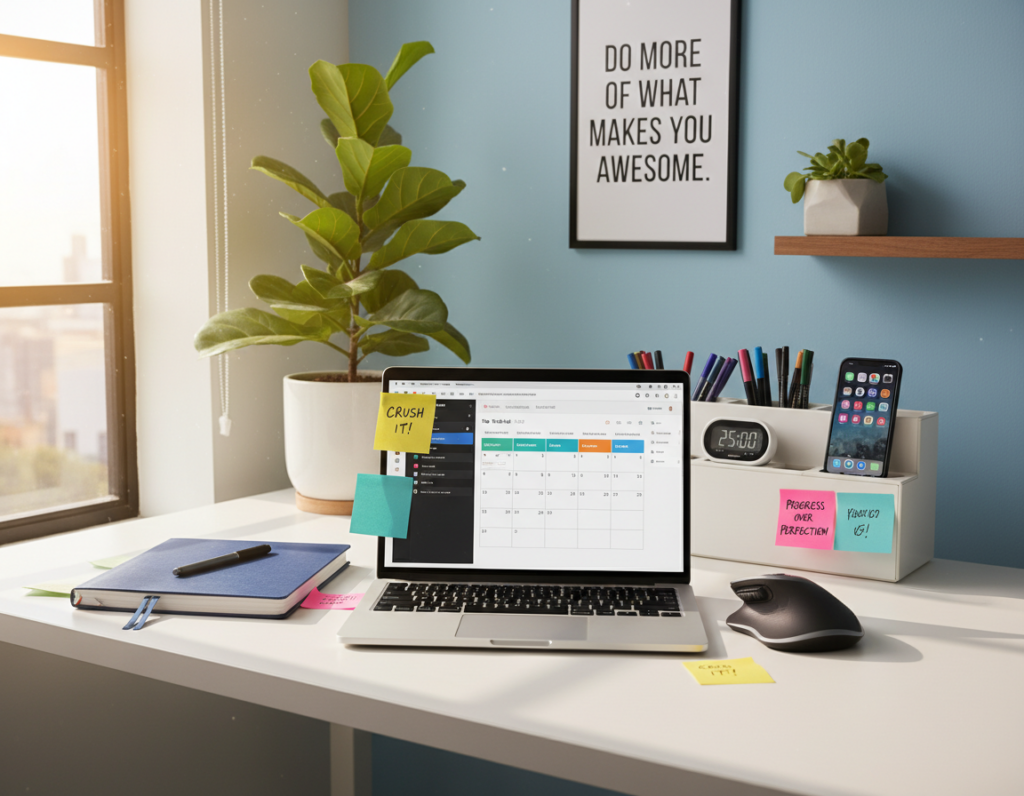
A few well-placed analog items change how the brain approaches tasks and transitions. Creating a tidy, low-tech workspace is a proven way to protect attention and reduce stress in daily life.
Analog Focus Aids
Physical tools like the reMarkable 2 tablet give a distraction-free canvas for notes and planning. They remove social apps and alerts so the user can work with fewer interruptions.
People report that having these things on a desk supports deeper concentration without constant phone checks. A simple alarm or paper timer pairs well with a tablet to mark sessions and breaks.
- Clear boundary: Analog items create a physical limit between work and leisure.
- Reduced overload: Less visual clutter means the brain can handle one task at a time.
- Reliable routine: Tactile aids help sustain long work periods and ease transitions.
“A distraction-free surface is one of the most practical tools someone with adhd can use to protect their attention.”
Selecting the Right Gadgets for Your Unique Brain
Choosing tools starts with naming the single daily struggle that trips you up most. That honest step clarifies whether the need is about time, medication, appointments, or task management.
An experienced adhd coach can help match options to how a brain prefers cues. They guide people toward devices, apps, or simple alarms that work best at school, work, or home.
Consider budget and long-term value before a purchase. A modest investment that reliably reduces missed appointments or late refills often saves money and stress over time.
Practical steps:
- List one recurring problem and test one tool that addresses it.
- Try a short trial period with apps or wearables before committing.
- Prioritize ease of use; the simpler option usually wins in daily life.
The best choices help people feel more in control of attention and daily responsibilities.
“Small, targeted changes to a routine can make management of time and tasks far more reliable.”
Conclusion
Small, reliable tools can reshape routines and reduce friction in task management. This is the clearest way to make steady gains and keep momentum.
These supports work best as complements to professional therapy and a dedicated coach. Keep the phone and other devices tidy so they remain helpful tools rather than distractions.
Consistency matters most. With the right mix of simple systems, steady habits, and guidance from a coach, daily life becomes more manageable and attention improves over time.